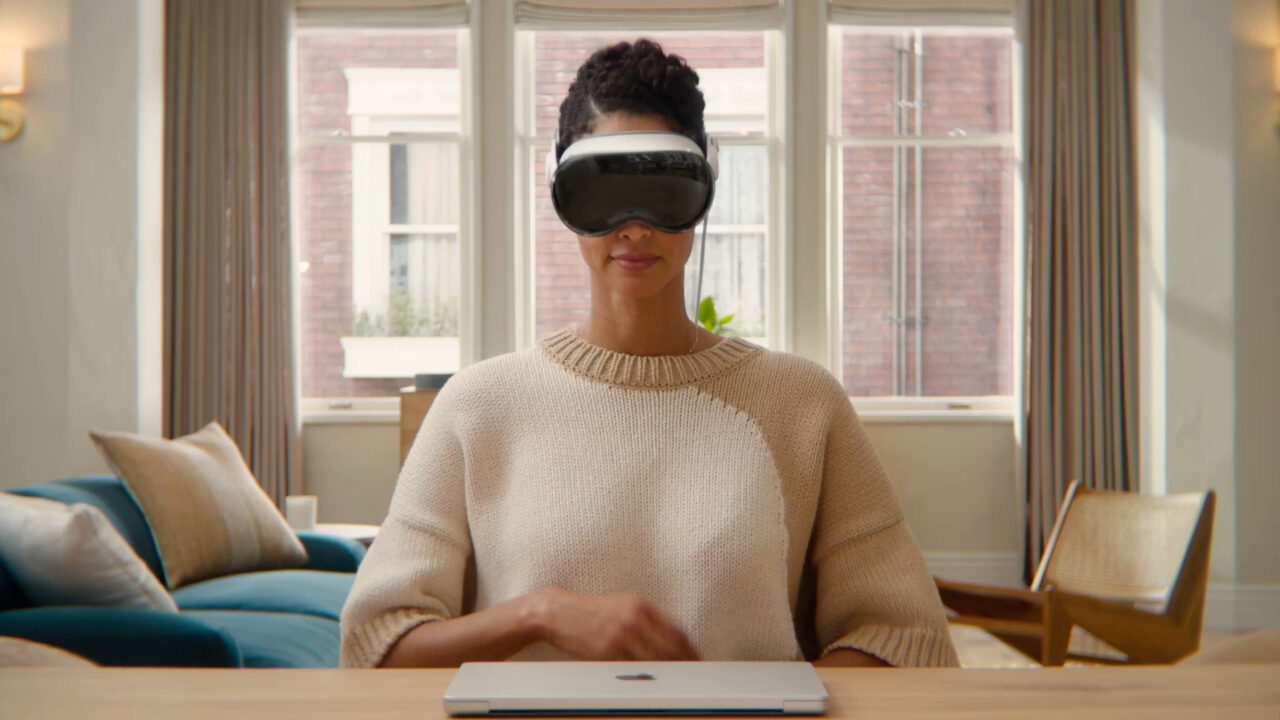
The much-awaited Apple Vision Pro 2 has recently made an appearance through FCC filings, potentially dampening the enthusiasm of many Apple enthusiasts. The disclosure confirms Apple’s plans for a second iteration of their mixed-reality headset but also hints that the device might bear a striking resemblance to its earlier version.
The FCC documents reveal that Apple has kept the design of the Vision Pro 2 largely in line with the original model. Initial reports suggest that the company may even maintain the substantial $3,499 price point, a price that previously set the first Vision Pro significantly above most of its rivals.
The most significant development appears to be in the internal workings of the device: the Vision Pro 2 is anticipated to house Apple’s M4 chip, constructed on a 2-nanometer process. This advancement should result in swifter functionality and improved efficiency, but these enhancements might not be sufficient to compensate for the absence of other novel features.
In a surprising turn of events, Apple might decide to scale back on certain components, including the EyeSight display – the external screen that digitally displays the user’s eyes to onlookers. While removing such features could reduce costs, it also risks making the already high-priced device less attractive.
Given the limited availability of mixed-reality content and the competitively priced Meta Quest 3 offering a much more affordable entry point, Apple’s latest headset could face considerable challenges. Analysts believe the Vision Pro 2 might serve more as an interim product, allowing Apple to maintain its presence in the XR space until it is prepared to launch genuine AR smart glasses targeted at the mainstream market.
What changes can be expected in Apple’s Vision Pro 2?
The Vision Pro 2 is expected to feature Apple’s M4 chip promising faster performance and better efficiency. However, the device might maintain a design and price tag similar to its predecessor.
What features might Apple reduce in the Vision Pro 2?
Apple might decide to scale back on certain elements, like the EyeSight display, which digitally projects the wearer’s eyes for bystanders, as a cost-saving measure.
What are the market challenges for the Vision Pro 2?
The limited availability of mixed-reality content and the competitively priced rivals like Meta Quest 3 could pose considerable challenges for Apple’s latest headset.