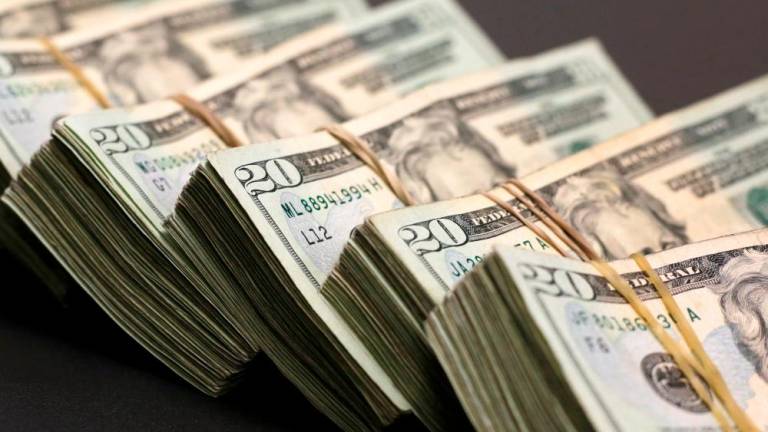
In a curious twist of the foreign exchange market, the U.S. dollar has lost a bit of its footing against the Vietnamese dong on the black market this past Saturday morning. The greenback slipped 0.04% to VND26,490 at unofficial exchange points, while Vietcombank held its rate steady at VND26,290. The State Bank of Vietnam maintained its reference rate at VND25,128, keeping a steady course amid fluctuating markets.
On a global scale, however, the U.S. dollar appeared to regain strength against other major currencies, bolstered by renewed trade frictions as President Donald Trump announced new tariffs aimed at Canada and other nations. This development reignited fears among traders that might ripple through international relations and global trade patterns.
The dollar made a notable gain of 0.79%, reaching 147.4 against the Japanese yen—setting it on a trajectory for nearly a 2% rise for the week, marking its largest weekly gain since early December. And while it remained flat against the Swiss franc, trading at 0.79695 franc, the situation was more dynamic elsewhere.
In Europe, the euro fell by 0.1% to $1.1688 as Trump’s tariff threats cast a long shadow over trade discussions between the European Union and Washington, potentially threatening the delicate balance of ongoing negotiations. Against the yen, the dollar edged up by 0.6% to 147.05 yen.
The Canadian dollar also felt the pinch, dropping 0.11% to C$1.3672 after a sharp decline of over 0.5% in the wake of Trump’s tariff announcement. The Brazilian real followed suit, depreciating by 0.26% against the dollar, illustrating the sweeping influence of the U.S. currency market.
How is the U.S. dollar performing against the Vietnamese dong?
The U.S. dollar has declined slightly, slipping 0.04% to VND26,490 on the black market, while official rates remained unchanged at VND26,290 for Vietcombank and VND25,128 for the State Bank of Vietnam.
What recent events are influencing the U.S. dollar’s value globally?
The U.S. dollar has gained strength against major currencies due to President Donald Trump’s announcement of new tariffs on Canada and other trading partners, which revived trade tensions and uncertainty.
What are the implications of rising tariffs for investors?
Rising tariffs can lead to increased volatility in the currency markets, creating opportunities but also risks for investors as trade relations shift and economic forecasts become more uncertain.