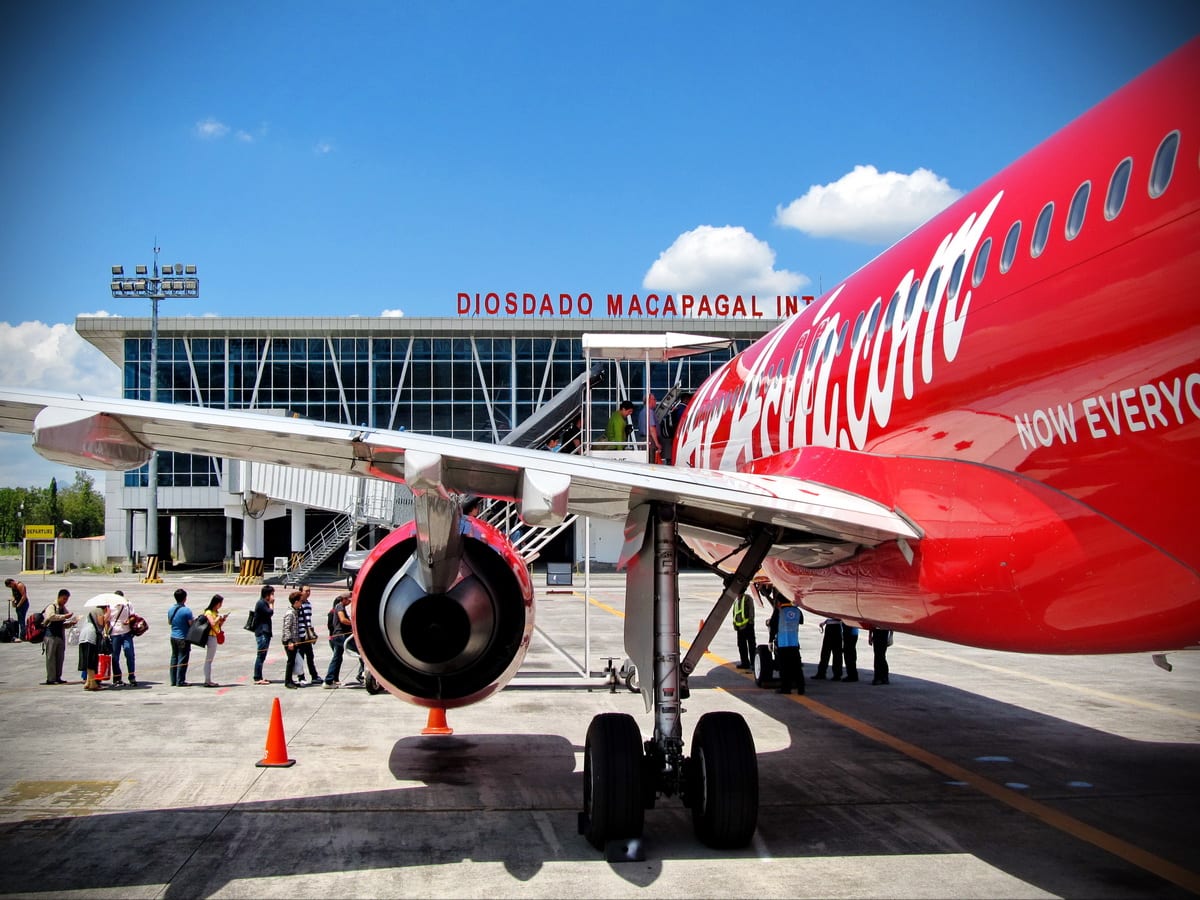
The Clark International Airport Corporation (CIAC) is taking decisive steps to establish the Clark Civil Aviation Complex (CAC) as the Philippines’ next central hub for cargo and logistics. This development is supported by the extensive redevelopment of the 2,367-hectare property, with CIAC rapidly improving infrastructure, managing the estate, and reforming policies to accommodate the increasing regional demand.
Joseph P. Alcazar, President and CEO of CIAC, states that the corporation has revised its strategy and has refocused on managing the estate and developing airport infrastructure. Their goal is to support the Clark International Airport (CRK) and convert the Clark Civil Aviation Complex into the Clark Aviation Capital.
Within the first five months of 2025, the Clark International Airport (CRK) doubled its cargo throughput compared to the previous year, handling over 35,900 tonnes across more than 2,500 flights. Historically, CRK has been seen as a strategic alternative to the crowded gateways in Metro Manila. Now, CRK is utilising its prime location, extensive aviation estate, and updated infrastructure to further CIAC’s logistics vision.
Central Luzon is the location of CAC, providing it with direct access to major expressways, seaports, and the market in Metro Manila. This connectivity enables quick cargo movement with various transportation options.
CAC, the largest aviation complex in the Philippines, is uniquely positioned, offering operational and tax advantages due to its status as one of the few freeport zones housing an international airport.
Claude’s close proximity to the industrial corridors in Luzon and its uncongested airspace make it an ideal location for time-sensitive cargo, including e-commerce deliveries and Maintenance, Repair, and Overhaul (MRO) operations.
To keep up with its expanding role in logistics, Clark is investing in long-term infrastructure that improves accessibility to key economic zones and trade routes.
Cargo volumes have soared at Clark, with a 100% increase in the first five months of 2025, which builds on a 32% increase from 2024.
The progress is supported by a series of infrastructure projects led by CIAC, including a new air traffic control tower, upgraded airfield lighting systems, and radar installations.
CIAC is also focusing on future growth areas such as temperature-sensitive cargo and e-commerce logistics. For instance, in 2024, CIAC signed a Memorandum of Understanding with Philippine Pharma Procurement, Inc. to explore the development of pharmaceutical logistics capabilities within the complex.
As part of its long-term strategy, CIAC is considering new infrastructure aimed at resilience and disaster readiness.
CIAC is also developing plans for a Multimodal Mobility Hub, a compact, connected space that integrates various transport modes, improving urban access and logistics efficiency.
CIAC plays a crucial supporting role for estate locators and cargo operators, despite not directly operating cargo services.
Policy reforms are helping to accelerate infrastructure development. The Public-Private Partnership (PPP) Code institutionalises best practices for private-sector participation and offers a transparent framework for implementing major projects.
Sustainability remains at the forefront of CIAC’s long-term perspective. CIAC actively supports initiatives that promote sustainable aviation.
What is the strategic plan of CIAC for Clark International Airport?
CIAC is focusing on improving infrastructure, managing the estate, and reforming policies to support Clark International Airport (CRK) and convert the Clark Civil Aviation Complex into the Clark Aviation Capital.
Which areas is CIAC targeting for future growth?
CIAC is exploring potential growth areas such as temperature-sensitive cargo and e-commerce logistics. The corporation is also planning to develop pharmaceutical logistics capabilities within the complex.
How is CIAC working towards sustainability?
CIAC actively supports initiatives that promote sustainable aviation. The corporation is planning infrastructure across Clark Aviation Capital that incorporates green building standards, efficient land use, and transport connectivity to reduce the carbon footprint of logistics operations.