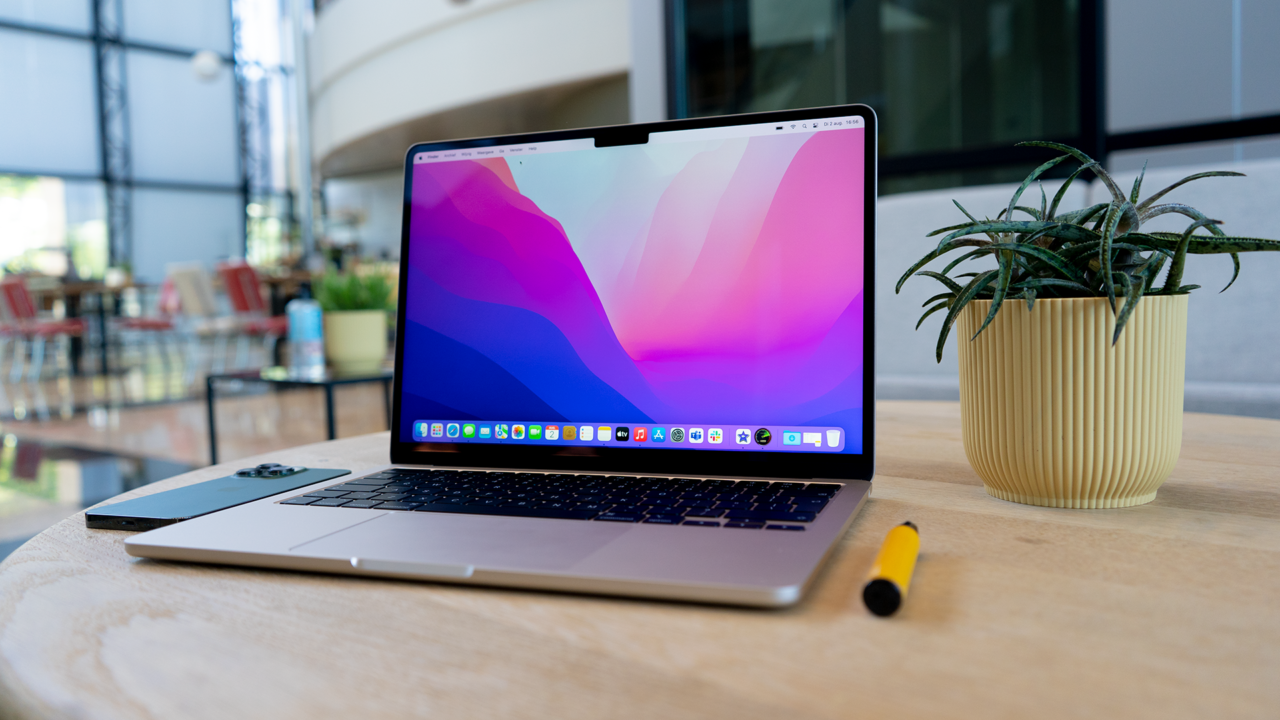
In 2010, Steve Jobs, the co-founder of Apple Inc., openly criticized the concept of a touchscreen MacBook, labeling the idea as ‘ergonomically terrible.’ However, Apple, one of the few mainstream laptop producers sans a touchscreen device, appears to be reconsidering this viewpoint. Recent reports suggest that the company may introduce a revamped MacBook with a touchscreen feature by late 2026 or early 2027.
The era of Steve Jobs, characterized by strong personal viewpoints and bold product design, is long gone. Today, Apple’s primary motivation in producing new devices and features is financial viability. While this might contradict Jobs’s initial perspective, it isn’t surprising to see the company considering the adoption of touchscreen technology in the MacBook lineup. After all, Jobs had once dismissed the idea of large-screen smartphones, yet Apple’s 6.9-inch iPhone 17 Pro Max is now a bestseller.
Steve Jobs’s argument against touch surfaces being vertical, which explains his preference for trackpads over touchscreens, has largely stood the test of time. The past decade and a half have seen other laptop manufacturers experimenting with touchscreen technology, with varying degrees of success.
Using a touchscreen on a laptop often proves to be awkward, with the need to reach over the keyboard making the experience uncomfortable and not particularly enhancing the user experience. In the early 2010s, when Windows laptops had subpar trackpads, touchscreens provided a much-needed alternative. However, this scenario is increasingly rare today as many of Apple’s competitors have caught up, and their laptop trackpads are no longer deficient in comparison to Apple’s.
Convertible laptops such as Lenovo’s Yoga series, which transition into a tablet-like form, are exceptions to the argument against laptop touchscreens. When the laptop transforms into a ‘tablet,’ the touchscreen becomes a primary mode of interaction, similar to an iPad or a Galaxy Tab. The introduction of a touchscreen makes sense in these devices as they differ fundamentally from traditional laptops.
What was Steve Jobs’s viewpoint on touchscreen MacBooks?
Steve Jobs was strongly against the concept of a touchscreen MacBook. He considered the idea to be ‘ergonomically terrible’ and stated that touch surfaces don’t want to be vertical.
Is Apple planning to release a touchscreen MacBook?
Based on recent reports, Apple is said to be considering the release of redesigned MacBooks with touchscreen features by late 2026 or early 2027.
What has been the experience with touchscreen laptops so far?
The experience with touchscreen laptops has been mixed. While they provided a valuable alternative when laptop trackpads were inefficient, the need to reach over the keyboard to use the touchscreen often makes the experience awkward and does not significantly enhance the user experience. However, touchscreen technology proves useful in convertible devices that can transition into a tablet-like form.