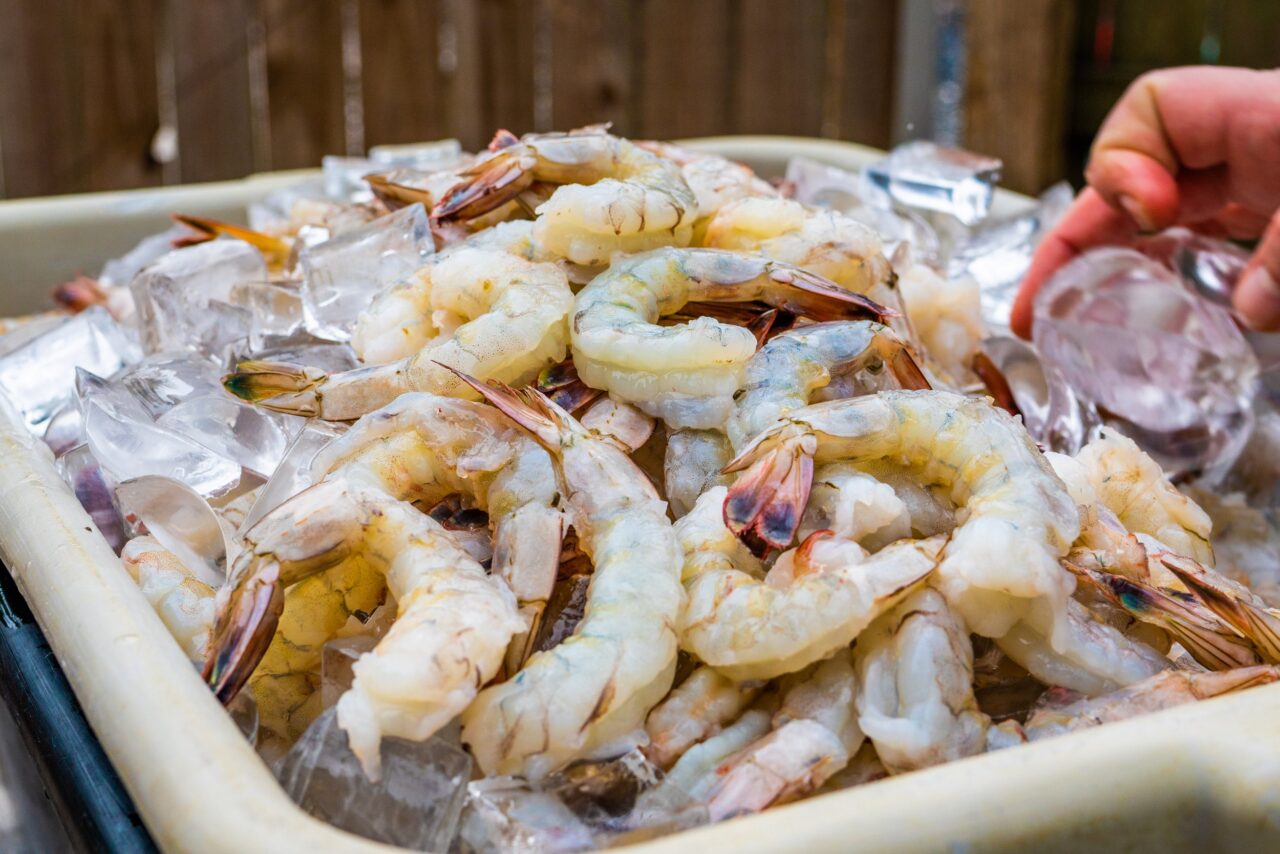
China has emerged as a vital avenue for Vietnamese shrimp exporters, importing nearly US$595 million worth of shrimp, as reported by the Vietnam Association of Seafood Exporters and Producers (VASEP). A supply shortage in China, coupled with a seasonal spike in demand for premium seafood delights like lobster, has created an auspicious window for Vietnam’s seafood industry.
The geographic proximity of Vietnam to China adds to the appeal, allowing exporters to offer competitive prices that capture the attention of Chinese importers. Traditional markets remain steady, with Japan, South Korea, and the European Union contributing to this growth. Of particular note, Japan—the third-largest market for Vietnamese shrimp—has showcased a robust appetite for deeply processed, ready-to-eat shrimp products that cater to busy lifestyles.
A tantalizing lobster on display in Ho Chi Minh City, showcasing the allure of premium seafood. Photo by VnExpress/Quynh Tran
Export dynamics to Europe have also enjoyed a boost thanks to the E.U.-Vietnam Free Trade Agreement. This agreement has positioned Vietnam favorably against other Southeast Asian competitors like Indonesia and Thailand. Conversely, the United States—once the leading market—has shown signs of decline in shrimp imports. Although exports to the U.S. increased by 13% to $341 million in the first half of the year, much of this surge was attributed to a pre-emptive rush in May, as businesses scrambled to fulfill orders ahead of the new tariffs introduced by the Trump administration.
In June, the situation took a turn, with exports plummeting by 37%. In April, the Trump regime imposed a 10% retaliatory tariff on various imports, which is set to escalate to 20% on shrimp from August 1. In addition to this tariff hike, Vietnamese exporters face the looming threat of preliminary anti-dumping duties that could exceed 35%, alongside countervailing duties expected by year’s end.
Amid these turbulent market conditions, VASEP has highlighted that U.S. tax policies are instilling caution among American importers, complicating pricing and order planning for Vietnamese businesses. This upheaval has prompted many seafood companies to explore alternative markets, with China appearing as an increasingly attractive option.
Global shifts are also pressuring domestic shrimp prices. The cost of large black tiger shrimp has recently soared to a record VND201,000 (US$7.69) per kilogram, primarily driven by limited supply against consistent demand. Overall, Vietnam’s shrimp exports surged by 27% in the first half of the year, totaling $2 billion. However, VASEP forecasts a slowdown in exports as July approaches, following the rush of orders in May and June.
With the U.S. delaying tariff increases until early August, some firms were able to expedite shipments, but the future remains uncertain, hinging on the final tariff levels and the capacity to diversify markets effectively. Many shrimp producers are now focusing on revising their export strategies to reduce dependency on the U.S. market, leveraging trade agreements like the EVFTA and the Comprehensive and Progressive Agreement for Trans-Pacific Partnership.
A notable trend is the emphasis on deeply processed products, which attract higher value. Major markets like the U.S. and the EU are implementing stricter traceability and origin requirements, driving firms to enhance productivity throughout their supply chains—from certified farming practices and disease control to optimized processing and logistics.
As Vietnam’s seafood industry navigates a volatile global market, the implementation of proactive financial and legal strategies will be crucial for sustaining growth and competitiveness.
How has China become a significant market for Vietnamese shrimp?
China’s domestic supply shortage, combined with a rising demand for premium seafood products, has opened the door for Vietnamese exporters, leading to substantial imports worth nearly US$595 million.
What impact have U.S. tariffs had on Vietnamese shrimp exports?
The new tariffs imposed by the U.S. have caused export volatility, with a significant drop in shipments in June following a May spike as businesses rushed to beat the tariff deadline.
What strategies are Vietnamese seafood businesses adopting for future growth?
Producers are shifting focus away from reliance on the U.S. market and are capitalizing on trade agreements like the EVFTA, while also prioritizing the production of deeply processed shrimp products to meet evolving market demands.