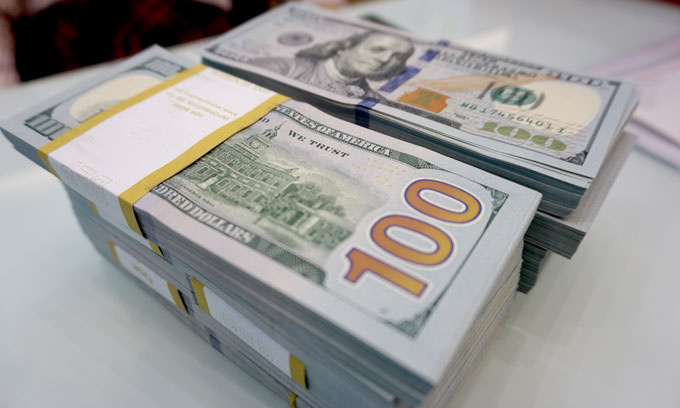
The U.S. dollar has taken another tumble against the Vietnamese dong, marking a trend that could signal continuous challenges for the greenback. As traders eyed a tumultuous month ahead, Friday morning saw the dollar heading for its fifth consecutive monthly decline against prominent currencies.
Vietnam’s leading bank, Vietcombank, set the dollar price at VND26,170, reflecting a slight dip of 0.11% from the previous day. Interestingly, the black market didn’t seem to follow suit, with the dollar inching up by 0.08%, trading around VND26,380.
Just before the weekend, the State Bank of Vietnam nudged its reference rate up by 0.06%, settling at VND24,978, demonstrating its ongoing commitment to managing currency strength amid fluctuating market conditions.
Globally, the dollar showed signs of softness, aligning with traders’ apprehensions about potential instability surrounding trade and fiscal health. Many investors were eagerly awaiting a crucial inflation report that was set to release later that day, poised to influence market sentiment dramatically.
That day, the dollar index—often seen as a barometer of the dollar’s strength compared to six major currencies—was lackluster. Set to decline by 0.4% for May, this would make it the fifth month in decline—a trend that’s causing whispers among market analysts.
The euro slightly strengthened, phrased at $1.1378, while the Swiss franc also gained some traction at 0.8216 against the dollar. Over in Japan, the yen surged by 0.3% to 143.73 per dollar, bolstered by recently released data showing that inflation in Tokyo reached a peak not seen in over two years.
As the week came to a close, the dollar had navigated a tumultuous landscape, marked by recent court rulings that altered the landscape for trade tariffs. The federal court temporarily reinstated tariffs initiated during President Donald Trump’s tenure, stirring uncertainty after a trade court had just directed a halt on those tariffs. Kyle Rodda, a senior financial market analyst at Capital.com, reflected on the market’s mood, emphasizing how this judicial tug-of-war has reignited worries among traders.
If only the dollar could learn to ride these waves with the grace of a balletic dancer!
How has the dollar’s performance affected the Vietnamese economy?
The dollar’s decline against the dong has implications for imports and exports, potentially making foreign goods more expensive while bolstering domestic products in the international market.
What factors are driving the dollar’s depreciation?
Traders are unsettled by ongoing uncertainties related to trade policies, possible tariff reinstatements, and upcoming inflation reports that could reveal more about the U.S. economic landscape.
How might the situation evolve in the coming months?
Keep an eye on economic indicators and regulatory shifts; shifts in inflation rates and monetary policy could significantly impact the dollar’s strength moving forward.