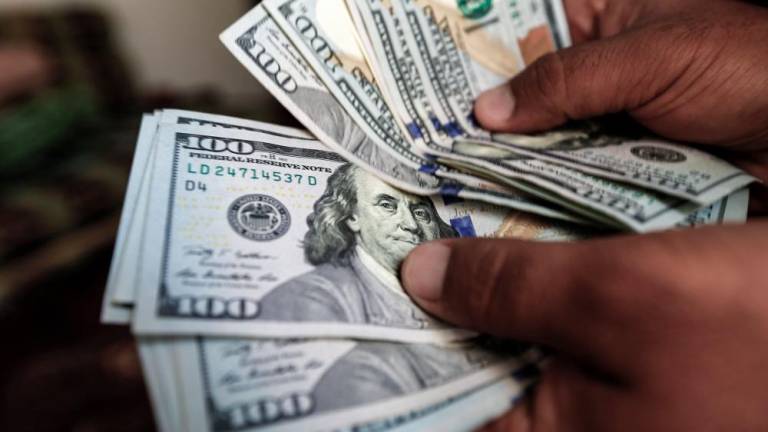
U.S. banknotes shimmered a bit brighter in Hanoi as the dollar edged up against the Vietnamese dong on Wednesday morning, continuing its upward trend against major currencies. With a rate of VND26,120 at Vietcombank, the dollar gained 0.08% compared to Tuesday. However, on the black market, the currency slipped slightly to VND26,360, down 0.04%.
In a proactive move, the State Bank of Vietnam raised its reference rate by 0.05% to VND24,947, reflecting changes in the market dynamics. Reporting from Reuters highlighted that the dollar retained its strength, buoyed by favorable economic indicators emerging from the United States.
The financial world greeted news of reduced trade tensions between the U.S. and Europe. Elsewhere, global bond markets began to stabilize after a tense rise in long-term yields, providing some much-needed relief for investors. A surge in U.S. consumer confidence ahead of key employment figures due on Thursday added to the overall optimism.
The dollar index, which measures the greenback against a host of currencies, ticked up by 0.1%, building on a robust 0.6% jump the previous day. Meanwhile, the greenback also gained a slight edge against the euro, trading at $1.132. In a curious twist, the yen remained relatively stable at 144.345 per dollar after experiencing a 1% drop on Tuesday, attributed to speculation that Japan may reduce the issuance of super-long bonds following recent yield spikes.
The rising dollar’s influence on various markets certainly adds an interesting dimension to the financial landscape—let’s hope your wallet is ready to keep pace!
How much did the U.S. dollar rise against the Vietnamese dong?
The U.S. dollar increased by 0.08% against the Vietnamese dong, reaching VND26,120 at Vietcombank.
What did the State Bank of Vietnam do in response to market changes?
The State Bank raised its reference rate by 0.05% to VND24,947 to adapt to the ongoing market conditions.
What contributed to the dollar’s strength in global markets?
The dollar’s strength was bolstered by positive economic signals from the U.S., easing trade tensions between the U.S. and Europe, and an unexpected rise in consumer confidence ahead of job reports.