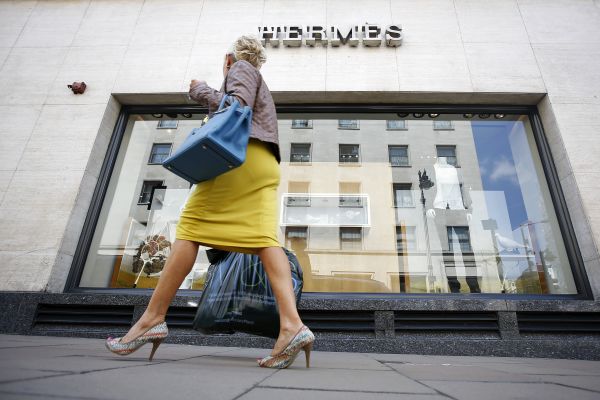
Renowned for its Birkin bags, Hermès reported a potential upturn in demand from China, despite quarterly sales falling slightly short of estimates, resulting in a 4% decline in its shares on Wednesday.
The mild optimism regarding Chinese demand, which contributes to approximately a third of worldwide luxury sales, is also reflected by competitors LVMH and L’Oreal.
“There was a very mild improvement in the third quarter,” commented Eric de Halgouet, the Finance Chief of Hermès, attributing this to stable real estate prices in major cities and positive trends in the stock market.
Last week, LVMH’s sales report initiated an $80 billion surge in luxury shares, fostering hopes of a revival of the industry in China. However, analysts have expressed caution, stating it might be premature to declare an end to the industry’s two-year decline.
Meanwhile, in the United States, foot traffic in Hermès stores has increased evenly across all regions, de Halgouet reported, adding that the company plans to continue investing in the US, having recently inaugurated a new store in Nashville.
The brand has refrained from raising prices domestically this year, following a 5% increase in May intended to pass the burden of tariffs onto its customers, as per de Halgouet.
The sales for the quarter ending in September totaled 3.88 billion euros ($4.52 billion), a 9.6% increase, bolstered by growth in the US. However, this was marginally below the predicted 10% growth, as per the Visible Alpha consensus cited by UBS.
Hermès shares decreased by 4.2% at 0832 GMT, following the trading update. The company’s control over its production, which has served as a buffer against a broader downturn, is anticipated to restrict its growth rate as consumer demand recovers more generally.
Sales of leather goods, including the signature Birkin, Constance, and Kelly handbags, grew by 13.3%, slightly below expectations. De Halgouet attributed this to limited inventory, which he assured would be replenished before the Christmas season and Chinese New Year.
While Hermès’ consistent performance may be viewed as uninteresting compared to the ongoing transformations at other brands, its shares briefly surpassed LVMH’s earlier this year, making it the largest luxury group in terms of market capitalisation. Nevertheless, the company’s shares have trailed competitors in the past three months, as investors shifted their focus to the improving performance of LVMH and Kering, which have increased by 31% and 65% respectively.
Unlike competitors such as Chanel and Dior, Hermès, which raised its prices less aggressively during the post-pandemic surge, increased its prices globally by 7% this year.
Sales of clothing, jewellery and silk scarves, products that appeal to a broader customer base than the exclusive handbags, experienced a slight increase in the third quarter.
What is the cause of the slight increase in Hermès’ sales?
The sales growth is attributed to the steady foot traffic in Hermès stores across all regions in the United States and a potential increase in demand from China.
What is the company’s response to the slight shortfall in sales growth?
Hermès plans to continue its investments in the United States and replenish its inventory of leather goods before the Christmas season and Chinese New Year to boost sales.
How did Hermès’ shares compare with its competitors?
While Hermès’ shares have trailed its competitors in the past three months, they briefly surpassed LVMH’s earlier this year, making it the largest luxury group in terms of market capitalisation.