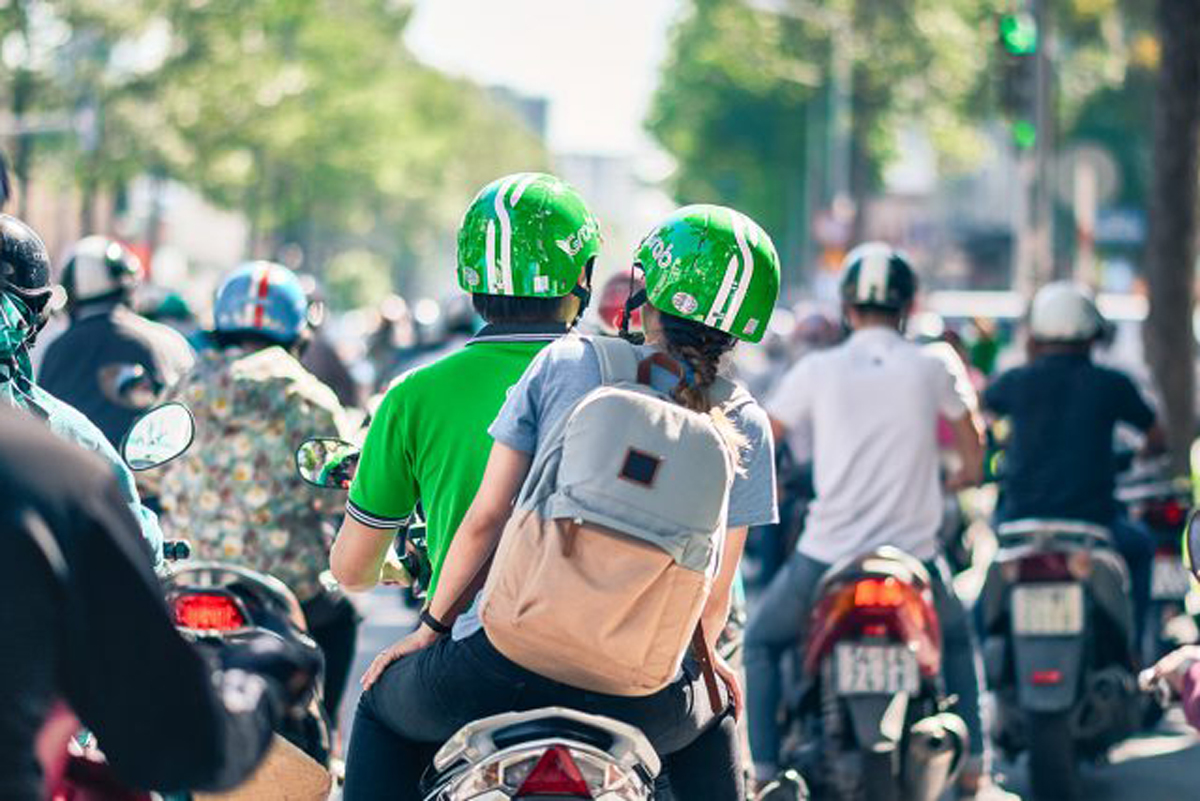
In Ho Chi Minh City (HCMC), approximately 14,000 ride-hailing motorbike drivers have transitioned from gasoline-powered vehicles to electric versions. This represents about 3.5% of the total fleet. Ngo Hai Duong, Head of the Road Transport Management Department of the city’s Department of Construction, revealed at a recent forum that HCMC aims to completely transition its 400,000-strong ride-hailing motorbike fleet to electric vehicles (EVs) by 2029.
The city has plans to decrease the number of registered gasoline-powered motorbikes for ride-hailing platforms starting next year. Duong revealed that out of the city’s 21,300 taxis, over 68% are now electric. He clarified that this transition was primarily driven by the businesses themselves rather than any city ordinances.
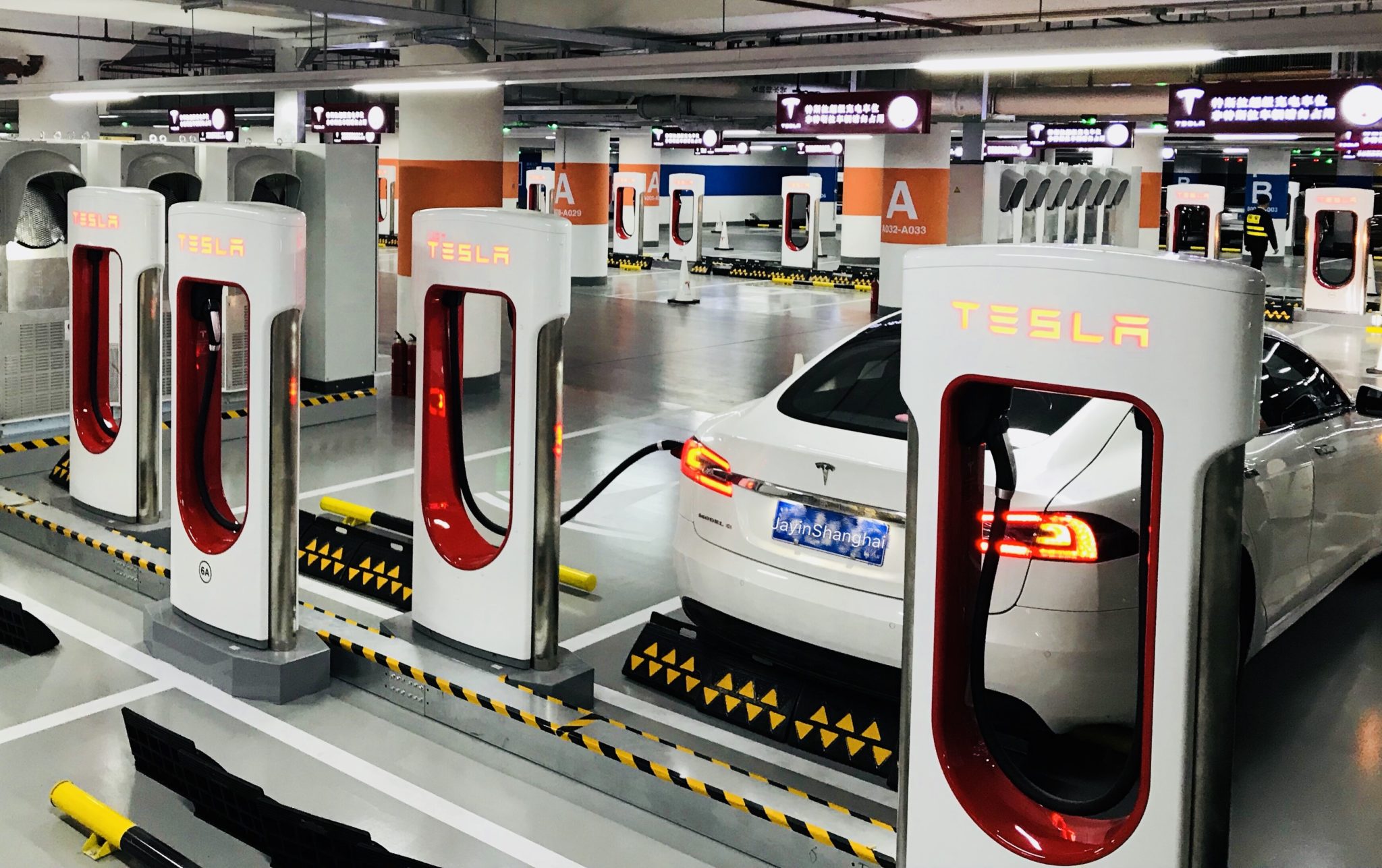
However, one of the main obstacles to the successful transition to EVs is the limited availability of charging stations. The growing demand from electric motorbikes, cars, and buses is starkly in contrast to the city’s fewer than 1,000 charging stations with 15,000 ports. Duong acknowledged that the growth of charging infrastructure has not kept up with the rise in electric vehicle numbers.
Hoang Anh Tuan, Director of the Transport and Traffic Safety Department of the Ministry of Construction, suggested that priority should be given to a city-wide plan for charging stations, akin to the existing network of gasoline stations. This would require setting criteria for locations and technical standards, along with a commitment to universal charging for all vehicles.
The Vietnam Automobile, Motorcycle and Bicycle Association echoed this sentiment and urged the government to implement “non-monopoly” regulations for charging infrastructure. This means that charging stations should be open to all electric vehicles.
Analysts have proposed the establishment of a system for recycling electric vehicles and their batteries. There is also a proposal being considered by the city to give households up to VND20 million (approximately US$800) to trade their gasoline motorbikes for electric ones. This move is part of the city’s concerted efforts to reduce pollution and create low-emission zones.
What is the percentage of the total fleet that has transitioned to electric vehicles in HCMC?
Approximately 3.5% of the total fleet in HCMC has transitioned to electric vehicles.
What obstacles are being faced in the transition to electric vehicles?
One of the main challenges is the lack of sufficient charging stations to meet the growing demand from electric motorbikes, cars, and buses.
What initiatives are being considered to encourage the transition to electric vehicles?
The city is considering a proposal to provide households with up to VND20 million (approximately US$800) to swap their gasoline motorbikes for electric ones. This initiative is part of the city’s broader efforts to reduce pollution and create low-emission zones.