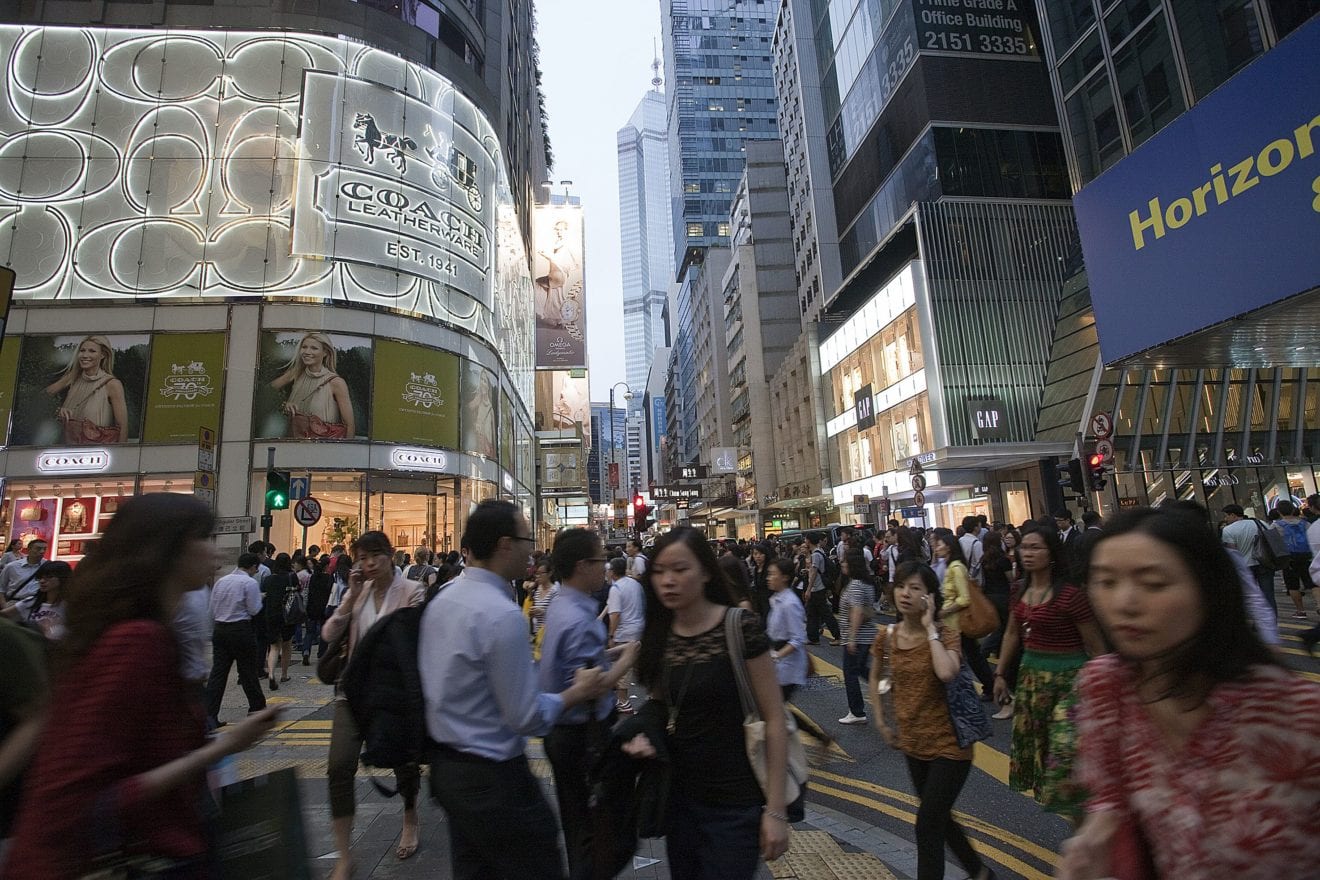
The continued downtrend in retail sales in Hong Kong marked its 14th consecutive month in April, as per the latest government data. Local consumers have adopted a cautious approach towards spending, and tourists from mainland China have been opening their wallets less frequently. Despite this, the decrease in sales wasn’t as significant as in March.
In April, retail sales by value decreased by 2.3 per cent year-on-year to HK$28.9 billion (US$3.68 billion). This follows a 3.5 per cent drop in March. In terms of volume, there was a 3.3 per cent decline from the previous year, which is less than the revised 4.7 per cent fall in March.
Despite an increase in tourists from mainland China, many were day-trippers who did not contribute significantly to retail sales. Furthermore, Hong Kong residents opted to spend more across the border, taking advantage of the strong position of the Hong Kong dollar against the Chinese yuan.
A government spokesperson from Hong Kong highlighted the ongoing adjustments in consumption patterns and increased competition among businesses. These factors, coupled with an uncertain macroeconomic environment, pose challenges to the retail sector.
Nonetheless, the spokesperson also noted that government initiatives to promote tourism and major events, along with steady growth in the mainland economy, are expected to boost consumer sentiment.
The Hong Kong Tourism Board’s data showed that the number of visitors in April was 3.85 million, a 13.5 per cent increase from the same month last year. This compares with 3.82 million in March, 3.67 million in February, and 4.74 million in January.
There were 2.81 million visitors from mainland China in April, showing a 13.3 per cent rise from a year ago. This is compared to 2.75 million in March, 2.77 million in February, and 3.73 million in January.
In April, sales of jewellery, watches, clocks, and valuable gifts experienced a 1.7 per cent decline year-on-year, following a 3.4 per cent drop in March.
How has retail spending in Hong Kong changed in recent months?
Retail spending in Hong Kong has seen a downtrend for 14 consecutive months as of April. Local consumers have been cautious in their spending, and visitors from mainland China have been spending less.
How has tourism affected retail spending?
Even though there has been an increase in tourists from mainland China, many are day-trippers who do not significantly contribute to retail sales. Additionally, Hong Kong residents have been spending more across the border due to the strength of the Hong Kong dollar against the Chinese yuan.
What factors pose a challenge to the retail sector in Hong Kong?
The ongoing changes in consumer consumption patterns, increased business competition, and an uncertain macroeconomic environment are all factors that present challenges to the retail sector in Hong Kong.