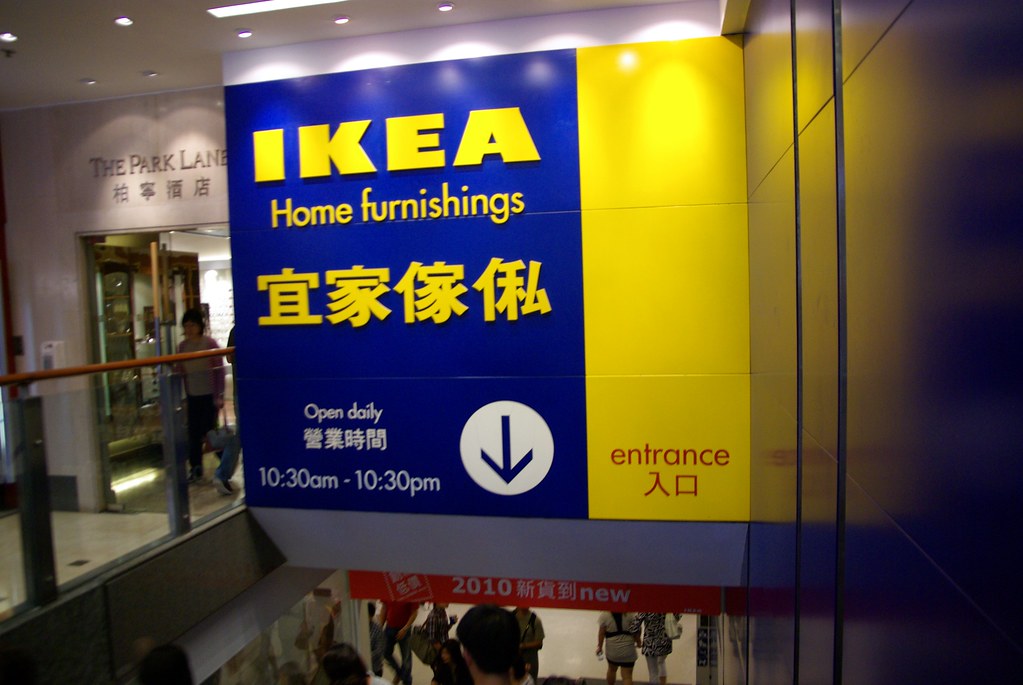
Swedish furniture giant, Ikea, has announced that it will be shutting down seven of its outlets in China, effective from February 2. The decision was revealed in a statement issued by the company on Wednesday.
The targeted locations for the shutdown include a branch in Shanghai’s suburbs, another in Guangzhou, as well as several others scattered across secondary cities such as Nantong, Xuzhou, and Harbin.
Retail businesses, in general, have been grappling with sales growth in China, as consumer confidence continues to wane, stemming from a long-standing property crisis, job security worries, and stagnant wages.
Presently, Ikea has approximately 40 stores operating on the Chinese mainland. The company disclosed in its statement that five new stores of varying sizes have commenced operations recently.
China, being the world’s second-largest economy, contributes approximately 3.5% to Ikea’s global sales. However, an increasing proportion of these sales originates from online flagship stores. To further nurture this online sales growth, Ikea inaugurated a new store on JD in August of the previous year.
The company stated that it will be shifting its strategy from large-scale expansion to precise cultivation, focusing on major markets such as Beijing and Shenzhen. This strategy includes the launch of over ten smaller stores within the next two years. The company also stated that it anticipates new store openings in the cities of Dongguan and Beijing during the first half of 2026.
Which Ikea stores in China are slated for closure?
Ikea plans to close stores in suburban Shanghai, Guangzhou, and several other locations in secondary cities such as Nantong, Xuzhou, and Harbin.
What proportion of Ikea’s global sales does China account for?
China accounts for about 3.5% of Ikea’s global sales.
What is Ikea’s strategy going forward in China?
Ikea plans to shift from large-scale expansion to precise cultivation, focusing on major markets like Beijing and Shenzhen, and opening more than ten small stores over the next two years. There are also plans for new store openings in Dongguan and Beijing in the first half of 2026.