Reliance Jio Platforms has decided to postpone its much-anticipated initial public offering (IPO) until after 2025, focusing instead on bolstering its financial health and expanding its array of digital services. The company is intent on enhancing its revenue streams and subscriber base prior to making its public debut.
With analysts currently estimating the value of Jio Platforms at over USD 100 billion, the subsidiary of Reliance Industries Limited (RIL) is rapidly diversifying. At the forefront of its endeavors is Reliance Jio Infocomm, its telecom operator, which generates around 80% of the company’s staggering USD 17.6 billion in annual revenue.
In a surprising turn of events, Jio has adopted a measured strategy towards its nationwide 5G rollout. The company slowed its expansion in October 2024, citing low utilization and delayed monetization as factors. Instead of racing ahead, Jio is prioritizing the transition of its existing 4G users to the more lucrative 5G services, aiming to maximize revenue from its current customer base.
While equipment vendors suggest that the current 5G network utilization sits at around 15%, insiders from Jio argue that actual usage is, in fact, more than double that figure. Working with industry giants like Nokia and Ericsson for its 5G infrastructure, Jio is continually evolving its strategy, tailoring it to meet customer demands in an increasingly competitive landscape.
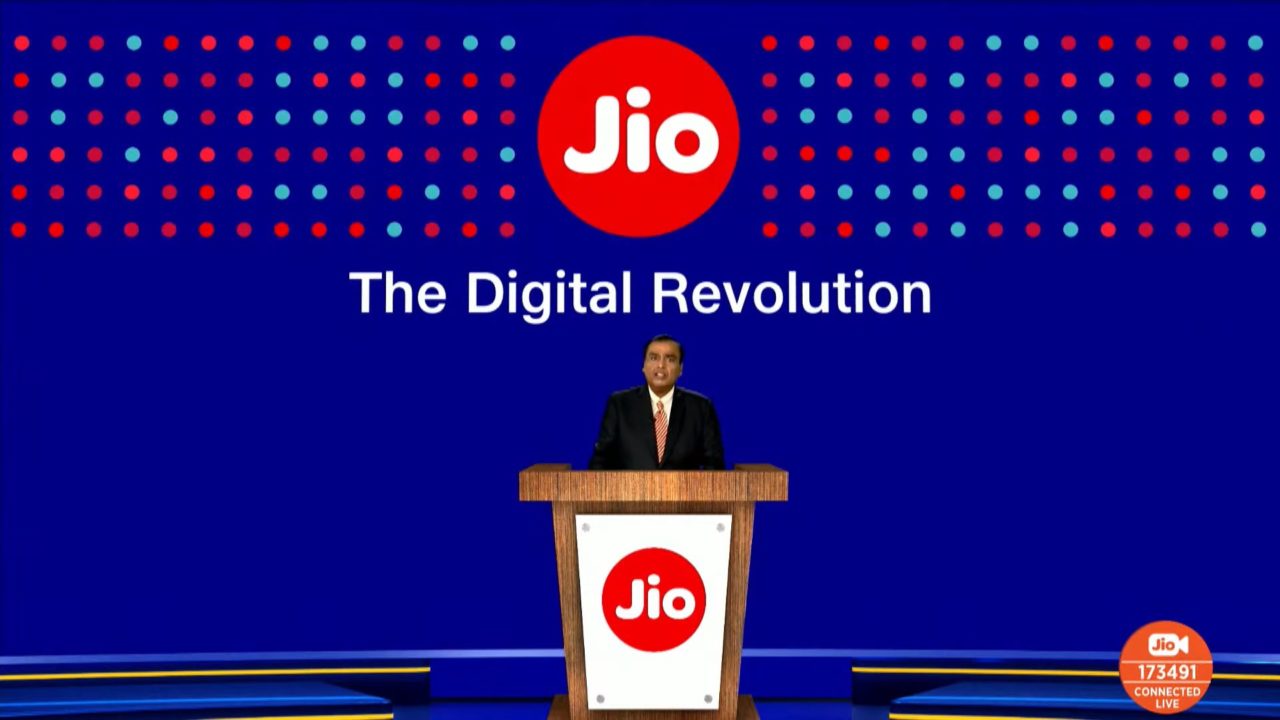
As it stands, Jio services approximately 130 million 5G users, putting it ahead of rival Bharti Airtel, which has close to 90 million users. During the company’s 47th annual general meeting (AGM), RIL Chairman Mukesh Ambani revealed that Jio now operates over 85% of India’s 5G radio cells, solidifying its dominant position in the telecommunications sector.
Diversifying its portfolio further, Jio is making significant strides in the realms of digital technology and artificial intelligence (AI). At the Mobile World Congress (MWC) 2025, the company unveiled its plans to develop an Open Telecom AI Platform in collaboration with AMD, Cisco, and Nokia. This ambitious platform aims to provide AI-driven solutions for telecom operators and service providers — a feat that could shake up the industry’s landscape.
Jio’s strategy includes seamlessly integrating AI and automation throughout its network operations. The forthcoming platform will leverage open application programming interfaces (APIs), agentic AI, large language models (LLMs), and traditional machine learning (ML) to facilitate intelligent, end-to-end telecom services. Talk about giving ‘smart’ a whole new meaning!
What is the primary reason for Jio’s IPO delay?
The delay in Jio Platforms’ IPO until after 2025 is primarily focused on strengthening its financial profile and expanding its digital services to enhance revenue streams and subscriber base before going public.
How does Jio’s 5G user base compare to its competitors?
Jio currently serves around 130 million 5G users, significantly more than its nearest rival, Bharti Airtel, which boasts approximately 90 million users.
What differentiates Jio’s approach to its 5G rollout?
Jio has taken a cautious approach to 5G expansion, prioritizing the migration of 4G users over aggressive expansion due to issues surrounding low utilization and delayed monetization.