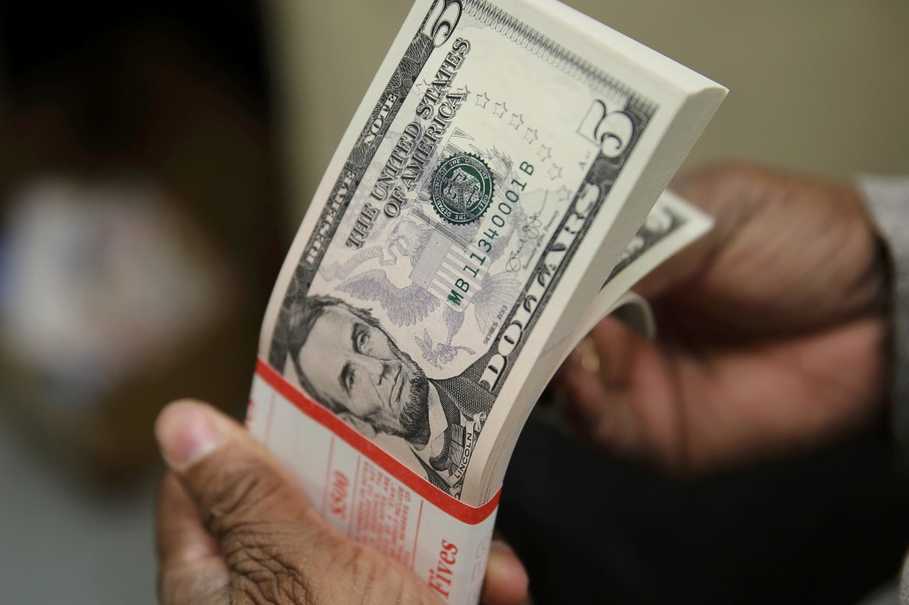

On Wednesday morning, the Vietnamese dong experienced a slight increase against the U.S. dollar on the unofficial market while maintaining a robust stance against other major counterparts. In unregulated exchange locations, the U.S. dollar dropped by 0.24% from the preceding day to a rate of approximately VND27,772. Despite this fluctuation, Vietcombank’s exchange rate remained stable at VND26,388.
In the worldwide market, the U.S. dollar exhibited steady performance against most of its major competitors during the early trading hours in Asia on Wednesday. This stability is attributed to investors seeking refuge in safe haven assets in the wake of a global stock sell-off that has lasted for several days.
Global equity markets have experienced a significant blow this week, with factors such as concerns over the valuation of AI stocks triggering a four-day losing streak for the S&P 500. U.S. equity futures continued this downward trend during Asian trading on Wednesday.
Simultaneously, the dollar index, an indicator of the U.S. dollar’s strength against six other currencies, remained unchanged at 99.594. This level is nearing a one-week high as U.S. Treasury bonds began to attract bids.
The yen saw a slight increase of 0.1% after reaching a nine-month low against the dollar on Tuesday, with the exchange rate standing at 155.49 yen to the dollar.
Meanwhile, the Australian dollar was slightly weaker, trading at $0.65085, a 0.1% decrease. This dip came after new data showed a steady rise in wages during the third quarter. The New Zealand dollar, or kiwi, also slid by 0.2% to $0.5659.
The euro remained virtually unchanged, trading at $1.1580 but hovering close to a one-week low of $1.1572. Similarly, the British pound sterling remained stable, trading at $1.3148.
How did the U.S. dollar perform against the Vietnamese dong?
On the unofficial market, the U.S. dollar experienced a slight decrease against the Vietnamese dong, dropping by 0.24% to a rate of approximately VND27,772.
What factors have contributed to the global stock sell-off?
The global stock sell-off has been attributed to concerns over the valuation of AI stocks, which has led to a four-day losing streak for the S&P 500.
How have other major currencies performed against the U.S. dollar?
The yen, Australian dollar, and New Zealand dollar all experienced slight decreases against the U.S. dollar. In contrast, the euro and British pound sterling remained stable.