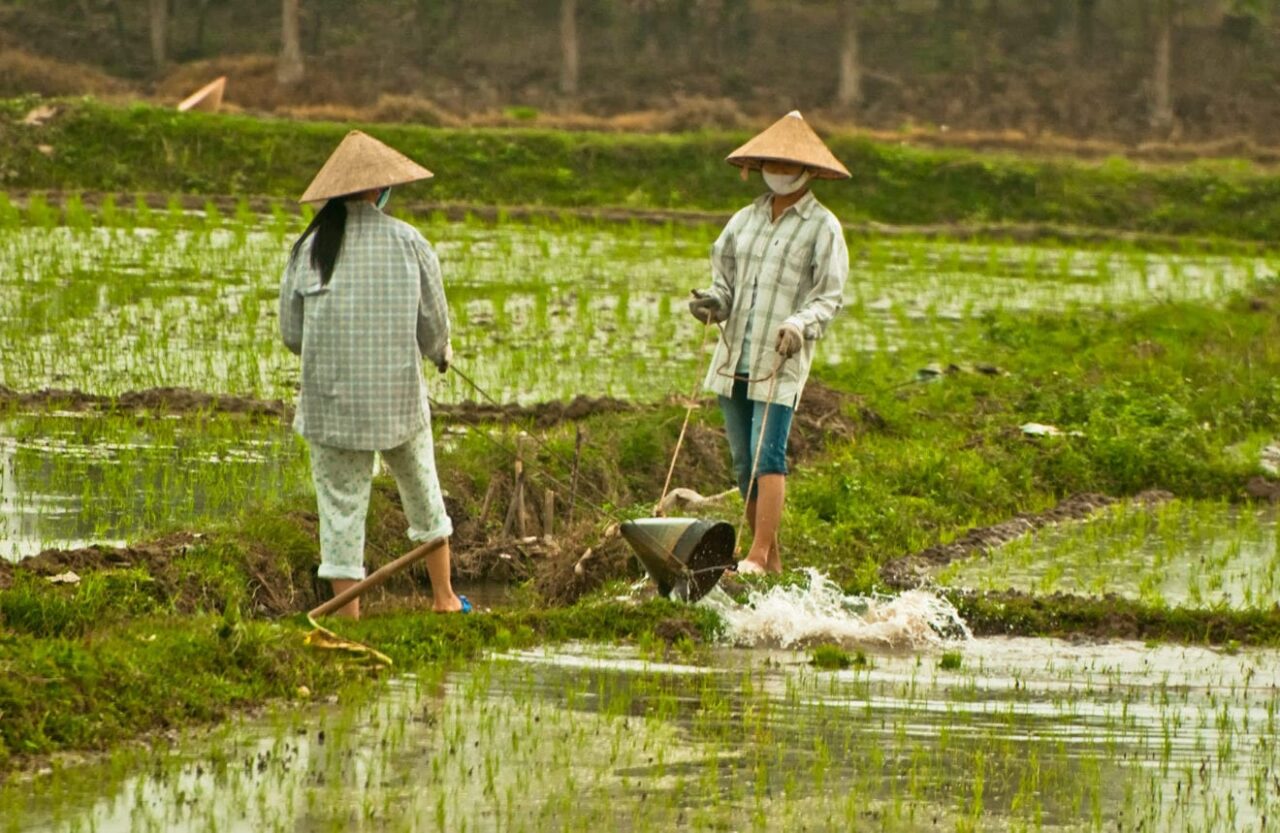
In the heart of Vietnam’s Mekong Delta, traders like Hang are feeling the pinch. In a region renowned for its rice production, Hang purchased only a few tons last week, a stark contrast to his usual orders of hundreds. Amid this landscape of caution, rice exporters are navigating a murky market, grappling with decisions that could impact their bottom lines.
Nguyen Chi Thanh, director of the rice division at export company Angimex, captured the mood succinctly: “Prices remain low, but we dare not buy much.” This hesitancy has been exacerbated by the Philippine government’s recent decision to suspend rice imports for 60 days, a move aimed at shielding local farmers. As the Philippines typically accounts for over 40% of Vietnam’s rice export market, this abrupt halt has cast a shadow over procurement practices in the Mekong region.
Across the globe, the pricing dynamics are shifting. Vietnam’s 5% broken rice is currently priced at $399 per ton, making it more expensive than similar varieties from Thailand and India. As demand falters internationally, buyers are increasingly hunting for cheaper alternatives, intensifying competitive pressure on Vietnamese exporters.
Faced with this volatility, local authorities in the Mekong Delta are advising exporters to exercise prudence amidst global uncertainties. The Department of Industry and Trade in Vinh Long, a province that heavily relies on exports to the Philippines, has issued a timely notice urging companies to remain vigilant and patient as market conditions evolve. Diversifying export markets is also touted as a strategy to mitigate risks.
Despite these challenges, Vietnam exported 6.3 million tons of rice valued at $3.17 billion in the first eight months of the year. However, while export volumes saw a slight uptick, the value plummeted by nearly 18% due to falling prices. The Philippines remains Vietnam’s largest buyer, importing 2.6 million tons.
On September 1st, the Ministry of Industry and Trade emphasized the importance of keeping a close eye on market trends and warned against overreliance on any single buyer. Leaders are advocating for expanded trade relationships with countries such as China, Indonesia, Malaysia, and nations across Africa and the Middle East.
Prime Minister Pham Minh Chinh has thrown his weight behind the diversification efforts, calling for improved market strategies to ensure food security in light of the fluctuating rice export landscape. He has also directed the State Bank of Vietnam to enhance credit resources for rice production and trading enterprises while urging the Ministry of Industry and Trade to intensify outreach to countries with whom Vietnam has free trade agreements, including the U.S., South Korea, and the E.U.
Experts remain optimistic; while higher prices compared to competitors like Thailand and India may appear disadvantageous, they have not diminished Vietnam’s market presence. Major clients continue to place orders, attracted by the country’s reputation for quality and reliability. Additionally, analysts point to potential opportunities in Africa and the Middle East as challenges in supply chains from Thailand and India persist.
Though the Philippine market poses a setback for now, projections suggest that Vietnam’s rice exports could exceed eight million tons this year, reinforcing its status as the world’s second-largest rice exporter, trailing only India. Exporters remain hopeful that prices will rebound as global demand increases and the Philippines resumes imports, making the situation as ripe with potential as the golden fields of rice in An Giang.
How are Vietnamese exporters responding to the suspension of rice imports by the Philippines?
Exporters are adopting a cautious approach, limiting their purchases and exploring strategies to diversify markets in response to the suspension.
What factors are influencing the current pricing of Vietnamese rice on the global market?
Vietnam’s rice prices are affected by competitive pressures from lower-priced rice from Thailand and India, combined with a decrease in global demand.
What are the government’s recommendations for Vietnamese rice exporters moving forward?
The government urges exporters to diversify their market base, expand their reach to new regions, and stay vigilant to market changes to mitigate risks.