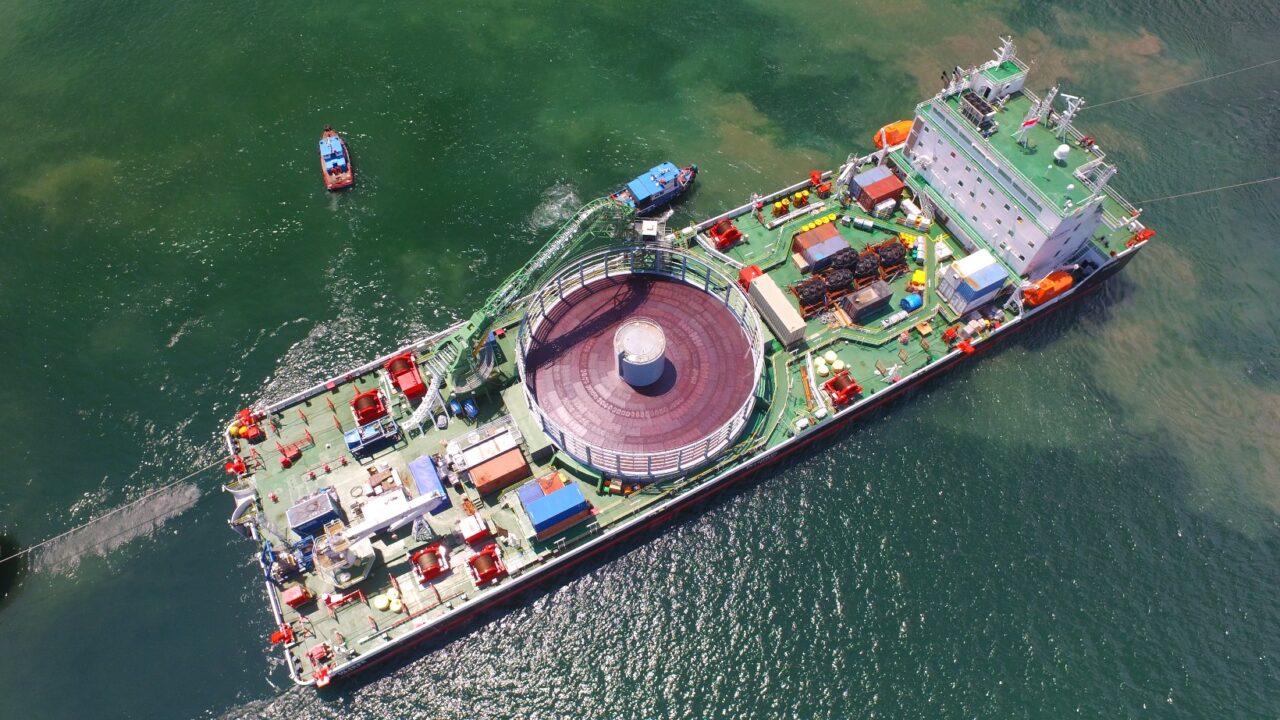
Submarine cables have become essential arteries for connectivity in the Asia Pacific, managing the surge in data traffic that accompanies the region’s digital revolution. With over half of the globe’s internet users calling this area home, the demand is fuelled by a variety of factors including cloud adoption, e-commerce growth, streaming services, and gaming, along with swift industry digitization.
Navigating this dynamic and complex landscape is no simple task, but APTelecom is leading the charge by executing critical submarine cable projects that focus on resilience and sustainability. In an exclusive interview with Telecom Review Asia, APTelecom President and Co-Founder Sean Bergin offered insights into the challenges and opportunities that are shaping connectivity across the Asia Pacific region.
As the epicenter of global data growth, the Asia Pacific region is witnessing an unprecedented demand for new submarine cable systems. “More than half of the world’s internet users live here,” Bergin noted, emphasizing that the appetite for new cables is being driven not just by raw data needs, but by a quest for security and resilience in data infrastructure. Both large-scale regional systems and specialized builds aimed at enhancing redundancy are currently in the pipeline.
What’s intriguing is that as digital traffic rises, so does the focus on trusted supply chains and dependable routes, both of which have become just as important as sheer capacity. APTelecom is at the crossroads of commercial demand and practical execution, guiding clients through the design and financing of new systems, while addressing local regulatory needs and establishing sustainable partnerships.
APTelecom’s vast experience across diverse markets reveals a critical lesson: the “one size fits all” mentality simply doesn’t apply to digital infrastructure. Each market boasts its unique regulatory landscape and investment climate. Bergin explained that the company merges global best practices with thorough local engagement, fostering trust and understanding with regulators, investors, and customers alike.
This approach is particularly effective in bridging cultural gaps — whether it’s translating a hyperscaler’s needs to a regional operator or helping a Southeast Asian carrier negotiate with a global buyer. In developed markets, the dialogue often revolves around sustainability and ESG compliance, while emerging markets prioritize bankability and basic infrastructure diversity.
At the heart of APTelecom’s strategy lies collaboration. No single player—be it a carrier, government, or hyperscaler—can realize these complex systems alone. A prime example of this is APTelecom’s recent collaboration with a consortium of regional operators to enhance connectivity linking Vietnam to vital hubs in Thailand, Singapore, and Malaysia. This project not only strengthens Vietnam’s integration into the regional network but also boosts resilience and diversification in critical data routes.
Involvement with partners in Africa and the Middle East is also on the rise, as Asia’s systems increasingly serve as key connections to Europe and beyond. Such partnerships are more than just ambitious ventures; they generate real benefits, translating into increased capacity, improved reliability, and enhanced service offerings for stakeholders that rely on robust, scalable infrastructure.
Looking ahead, APTelecom’s immediate priorities include supporting projects that balance commercial viability with strategic resilience. For clients, futureproofing involves diversification — ensuring multiple cable routes and a mix of terrestrial and subsea connections. This flexibility extends to contract structures that accommodate scaling capacity, integrating new technologies, and bringing on additional partners.
Another facet of APTelecom’s mission is addressing workforce development. In many of the markets they serve, talent is in short supply, so equipping local engineers and operators with the necessary skills is a fundamental part of sustaining infrastructure longevity.
In a fast-evolving sector, embracing technological advancements while mitigating risks is crucial. By helping clients establish dependable partnerships and build infrastructure that earns the trust of carriers and hyperscalers, APTelecom is not just adapting; they are setting the stage for the future of connectivity in Asia. Because let’s face it, in this high-stakes game of digital chess, every move counts.
How is APTelecom responding to the growing demand for submarine cables?
APTelecom is actively spearheading new submarine cable projects and enhancing existing ones to address the significant demand driven by factors such as cloud adoption, e-commerce, and digitalization across industries.
What role does local engagement play in APTelecom’s strategies?
Local engagement is crucial; APTelecom tailors its approaches to each market’s regulatory and investment climate, building trust with key stakeholders, which ultimately helps in successful project execution.
Why are partnerships important for APTelecom?
Partnerships are essential because they combine resources and expertise from various entities to tackle complex connectivity challenges, ensuring that projects deliver real value and enhance regional resilience effectively.