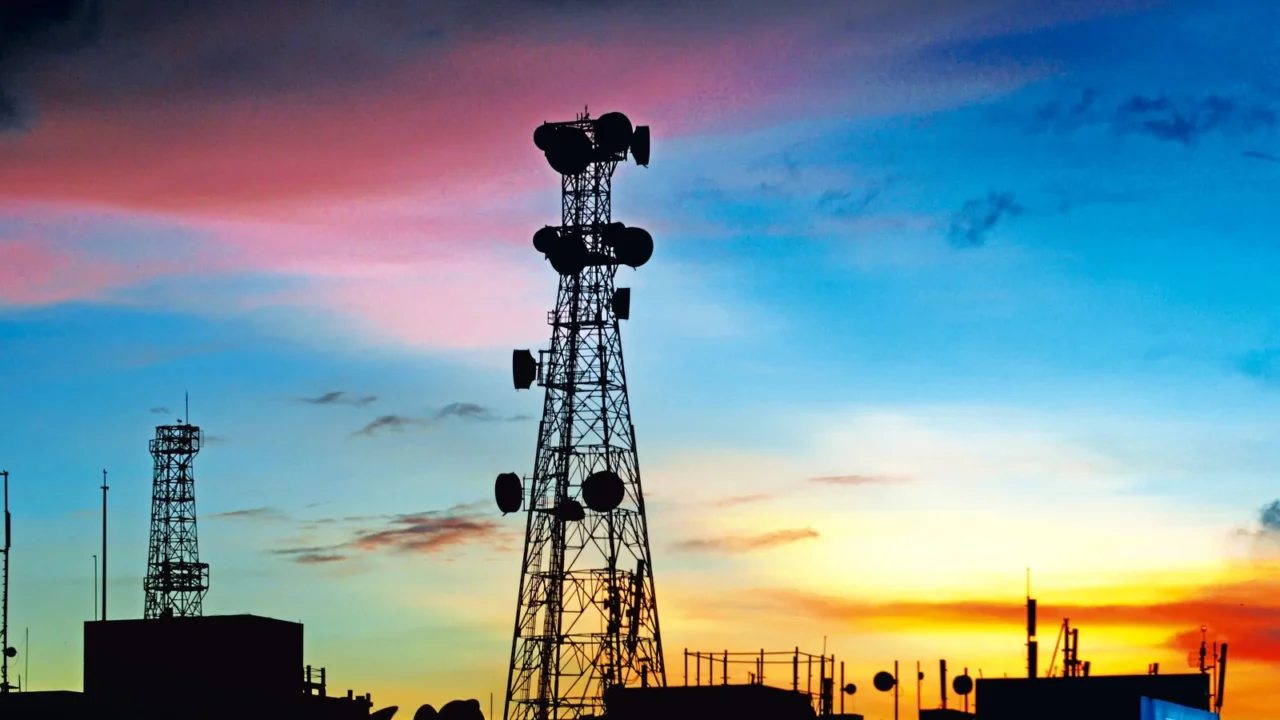
Bharat Sanchar Nigam Limited (BSNL) is gearing up to bolster its network with plans to deploy an additional 100,000 4G towers across India. This initiative follows the successful installation of nearly 100,000 towers, marking a significant step in their ongoing infrastructure expansion.
Union Minister of State for Communications, Chandra Sekhar Pemmasani, expressed optimism about the upcoming proposal: “After successfully installing 100,000 towers with optimal 4G equipment, we will approach the Cabinet and Prime Minister Narendra Modi to approve another 100,000 towers.” He also highlighted the plan to enhance BSNL’s cash flow, which would facilitate the installation of more 4G and 5G equipment and enable the monetization of BSNL’s assets.
BSNL’s ambitious journey took a significant turn in May 2023, when it awarded a major contract to a consortium led by Tata Consultancy Services (TCS). This partnership also includes Tejas Networks, the Center for Development of Telematics (C-DOT), and ITI Ltd., covering the supply of 4G equipment for the new 100,000 towers, along with necessary network components and a 10-year maintenance contract.
Pemmasani acknowledged initial equipment challenges but noted substantial improvements: “There were some problems with the equipment in the beginning. But now, it’s functioning well. We expect it to operate near perfection by the end of July or August next year.” He also emphasized the technological lead enjoyed by global telecom firms like Nokia and Ericsson, whose legacy spans decades, compared to India’s homegrown solutions that are still in their infancy.
BSNL currently faces tough competition; with its limited 4G infrastructure, retaining customers has been a challenge. Pemmasani pointed out, “One major limitation is that we currently have only 100,000 4G towers. In comparison, Reliance Jio and Airtel each have more than 500,000 towers.” However, he is confident that as the 4G rollout progresses, customer retention will improve significantly.
Looking ahead, BSNL plans to launch its 5G network by June 2025. Telecom Minister Jyotiraditya Scindia confirmed that the transition to 5G will only occur once the 4G network stabilizes and meets quality standards: “Once the 100,000 towers are up and the network is stabilized, and once we see that the QoS is up to the mark, then we can start switching.”
In a bold move, the Indian government has ruled out foreign involvement in BSNL’s 5G deployment, insisting on the use of domestically developed technology. BSNL aims to roll out 5G standalone services using the 900 MHz and 3.3 GHz spectrum bands, starting with an initial target of 100,000 subscribers. The company is also set to introduce 5G fixed wireless access (FWA) services, ensuring cutting-edge connectivity for urban users.
In a nod to its readiness, BSNL has successfully tested its indigenous 5G technology in New Delhi, across locations like Nehru Place, Chanakyapuri, and Minto Road, signaling that they’re primed to push forward once their 4G foundation is firmly in place. Who knew the race for digital dominance could feel so thrilling?
What is BSNL’s plan for expanding its 4G network?
BSNL intends to deploy an additional 100,000 4G towers across India, building on its existing infrastructure to enhance customer retention and prepare for 5G.
When does BSNL expect to launch its 5G network?
BSNL aims to launch its 5G services around June 2025, contingent on stabilizing its 4G network.
What is unique about BSNL’s approach to 5G technology?
BSNL will rely solely on domestically developed technology for its 5G deployment, ensuring that all equipment and services are homegrown.