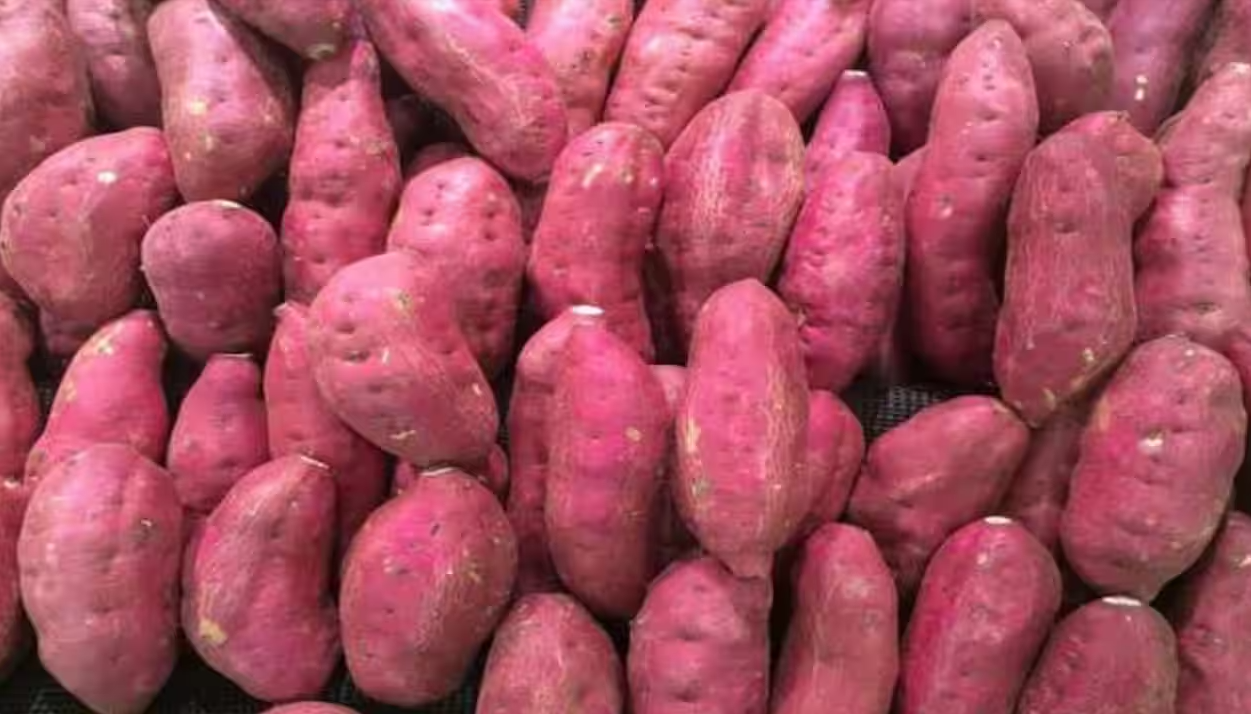
In a curious culinary twist taking Vietnam by storm, “durian sweet potatoes” have captured the attention of food lovers across social media platforms since July. Vendors tout these unique spuds for their creamy texture and sweet flavor reminiscent of the notoriously pungent durian.
Hong Anh, a food store owner in Ho Chi Minh City’s District 12, recalls her initial skepticism when suppliers first introduced her to the product, especially given its steep price point. However, after sampling the sweet potatoes herself, she discovered their chewy, delectable nature that “melts” in the mouth, prompting her to add them to her offerings.
“In just half a month, I sold about 300 kilograms,” she noted, highlighting the appeal of the potatoes’ eye-catching appearance and uniform size. Customers are also drawn to them due to their intriguing name, creating a buzz in the market.
Currently, Anh retails these sweet potatoes at VND96,000 (US$3.64) per kilogram—double the price of top domestic varieties and three times that of standard sweet potatoes. While these tubers are a staple in Vietnam, cultivated extensively in regions like the Central Highlands and Mekong Delta, they broke the bank when it comes to consumers checking their wallets.
Last year, sweet potato exports brought in nearly VND900 billion, with farm-gate prices hovering between VND14,000 and VND16,000 per kilogram and retail prices ranging from VND25,000 to VND50,000. The growing demand for the Chinese variety has seen distributors like To Khuyen from Lao Cai Province, near the China border, importing thousands of boxes within just a month. Initially priced over VND100,000 per kilogram due to low supply, she has now lowered prices by 15%. “Since early July, these sweet potatoes have been flying off the shelves. Wholesalers snap them up as soon as the trucks arrive,” she shared.
Beyond their enticing flavor, the potatoes boast thick, easy-to-peel skin and come packaged in chic cardboard boxes—making them a hit for consumers looking for both taste and aesthetics. Despite this, they remain somewhat of a niche offering. Representatives from the Thu Duc and Hoc Mon wholesale markets in Ho Chi Minh City remarked they haven’t introduced these varieties yet, focusing solely on local options.
As excitement builds around these sweet potatoes, some market sellers urge caution regarding new products with unclear origins. According to the Guangdong Provincial Information Portal in China, these sweet potatoes belong to a variety called Xinxiang, or mini sweet potatoes, which have been cultivated since 2007 in southern provinces like Zhejiang and Guangdong, with farmers receiving between CNY13-16 ($1.82-2.24) per kilogram.
How are “durian sweet potatoes” different from regular sweet potatoes?
These sweet potatoes are known for their chewy texture and sweet flavor, resembling that of durian, which sets them apart from traditional varieties.
Why are these sweet potatoes priced significantly higher than local varieties?
Their pricing reflects a combination of factors, including their imported nature, unique culinary qualities, and increasing demand among consumers curious about novel products.
What challenges do consumers face with these new sweet potatoes?
Some market sellers express concerns about the origins of these imported sweet potatoes, prompting consumers to be cautious when trying new and unfamiliar products.