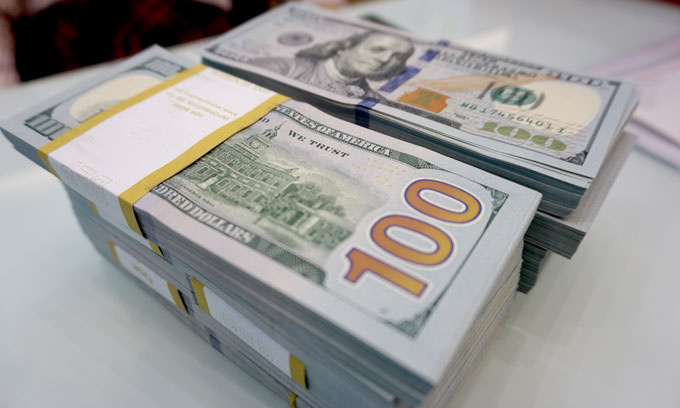
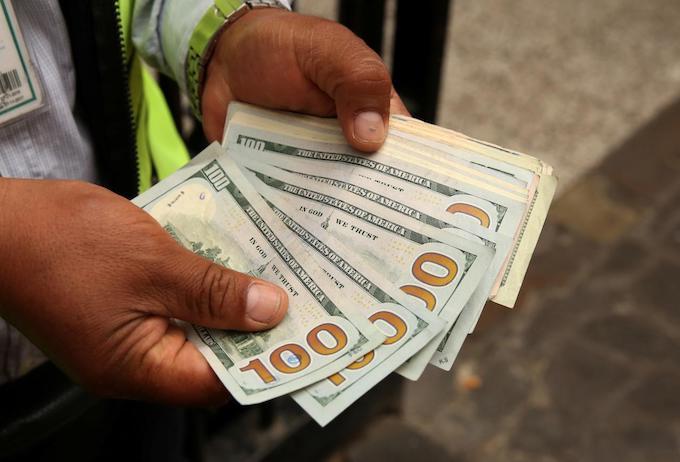
The U.S. dollar took a dip against the Vietnamese dong on the black market Saturday morning, rounding out a week of financial fluctuations. The greenback slid 0.34% to VND26,290 at unofficial exchange points, signifying a notable shift as currency dynamics remain in flux.
Meanwhile, Vietcombank maintained its rate at VND26,223, while the State Bank of Vietnam’s reference rate held steady at VND24,975, suggesting a calm amidst the stormy seas of international currency markets.
Globally, the dollar experienced a surprising uptick against major currencies like the euro and yen on Friday. Investors rushed to secure safe-haven assets in response to escalating geopolitical tensions in the Middle East following an Israeli attack on Iran, according to Reuters. In the afternoon trading session, the dollar notched a 0.3% gain to reach 143.88 against the Japanese yen and edged up 0.1% to 0.8110 against the Swiss franc. Despite this bounce, the dollar remains set for a weekly decline against both the yen and franc, and is down nearly 1% versus the yen—a trajectory that could mark its most significant weekly drop since mid-May.
“Historically, geopolitical events trigger knee-jerk reactions in the markets,” noted Jack Janasiewicz, portfolio manager at Natixis Investment Managers in Boston, emphasizing the importance of looking past temporary turbulence.
As we navigate these treacherous financial waters, the question remains: how will currencies dance in the face of shifting global dynamics?
What happened to the U.S. dollar against the Vietnamese dong?
The U.S. dollar dropped 0.34% to VND26,290 on the black market.
How did the U.S. dollar perform globally?
On Friday, the dollar rose against major currencies like the euro and yen amidst geopolitical tensions in the Middle East.
What are the implications of these fluctuations?
While the dollar gained temporarily, it is still on track for a weekly loss against the yen and franc, raising concerns about ongoing market stability.