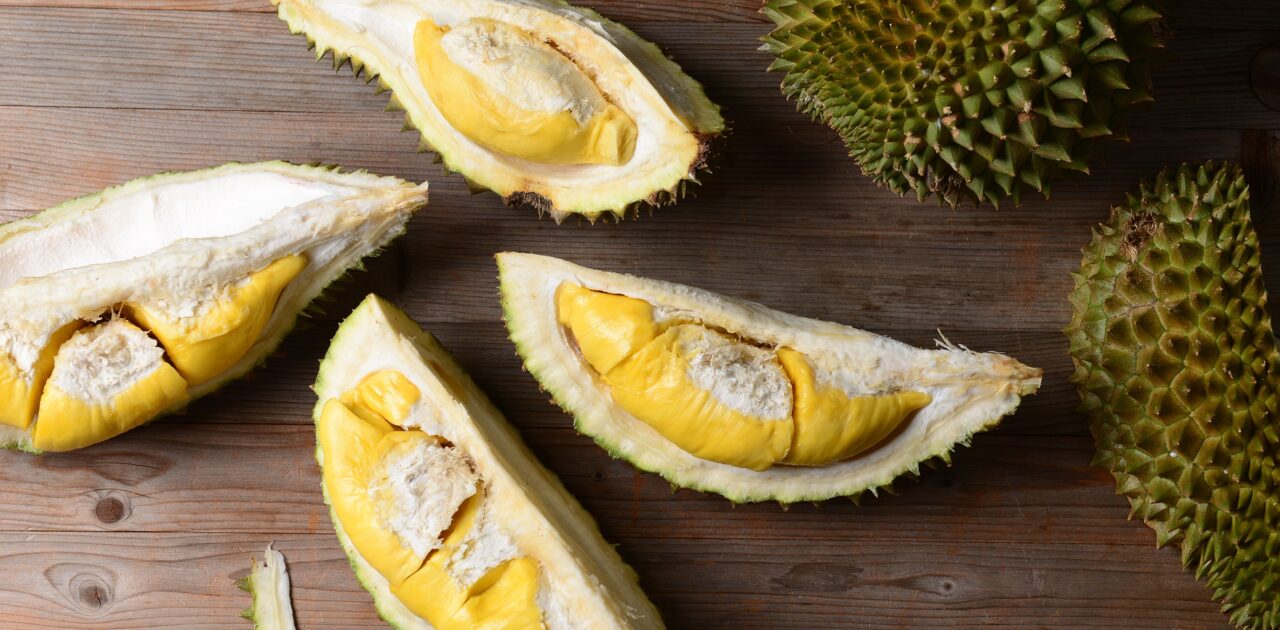
Indonesia has recently achieved a significant milestone in its agricultural export sector with the first direct shipment of frozen durians to China. This 48-tonne shipment, valued at Rp5.1 billion (US$305,000), was processed in West Java and shipped from Tanjung Priok Port in North Jakarta to Qingdao Port, China.
The successful export marks the conclusion of an extensive process that spanned nearly two years, according to Sahat M. Panggabean, the head of the Agricultural Quarantine Agency. Before this breakthrough, Indonesia’s frozen durians used to reach China via intermediaries like Thailand and Malaysia. The fruit was processed in these countries and then re-exported to China.
This practice underwent a change after an export protocol, which would allow for direct shipments, was finalized and signed by China and Indonesia in May. As a result, eight frozen durian packing facilities in Indonesia have met the standards required to serve as export hubs for China. Industry experts also highlight how direct shipments have drastically cut logistics costs, from approximately $18,000 down to $10,000-11,000.
China is deemed the world’s largest durian market. In the previous year, China imported a staggering 15.6 million tonnes of durian valued at US$6.99 billion. The majority of these imports came from Thailand and Vietnam, which made up 57% and 41.5% of the shipments, respectively. The remaining shipments came from the Philippines and Malaysia.
Despite a slight decrease in demand in the first half of this year, which saw a 15% drop in imports to 708,190 tonnes, the market remains robust. Aditya Pradewo, the secretary general of the Indonesian Durian Plantation Association, mentions that durian prices in China are still five to seven times higher than those in Indonesia.
Pradewo believes that, with premium varieties such as Bawor, Super Tembaga, and Namlung, Indonesia could secure 5-10% of the Chinese market. This percentage equates to potential annual foreign exchange earnings of Rp6.4-12.8 trillion.
Quarantine agency data shows that in the first 11 months of this year, Indonesia exported 10,162 tonnes of durians, primarily to Thailand, China, and Malaysia. The country’s durian production reached 2 million tonnes in 2024, marking a four-year high. Java, Sumatra, Kalimantan, and Sulawesi emerged as the top durian-growing regions.
According to Zulkifli Hasan, Indonesia’s Coordinating Minister for Food Affairs, “Durian Nusantara is Indonesia’s strength in Asia”, boasting 21 of the 27 durian species recognized globally. As of 2024, Indonesia has registered 114 new superior varieties.
What was the significance of the recent durian shipment from Indonesia to China?
This marked the first instance of a direct export of frozen durians from Indonesia to China, a process that took nearly two years to accomplish.
How has the new export protocol impacted the logistics cost of durian exports to China?
Direct shipments have significantly reduced logistics costs from around $18,000 to $10,000-$11,000.
What potential does Indonesia have in China’s durian market?
With premium durian varieties, Indonesia could potentially capture 5-10% of the Chinese market, yielding annual foreign exchange earnings of Rp6.4-12.8 trillion.