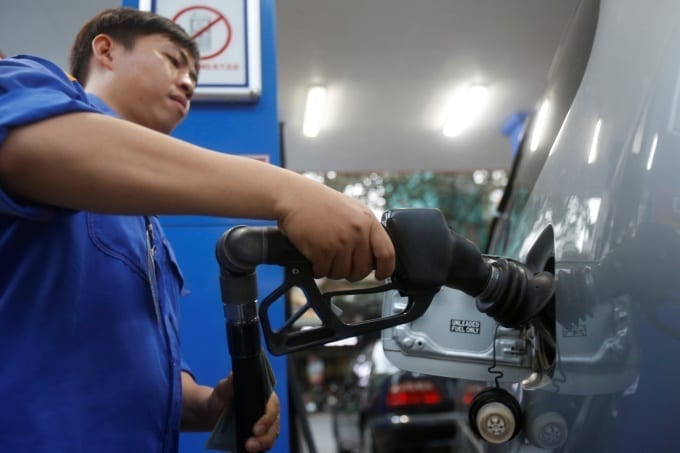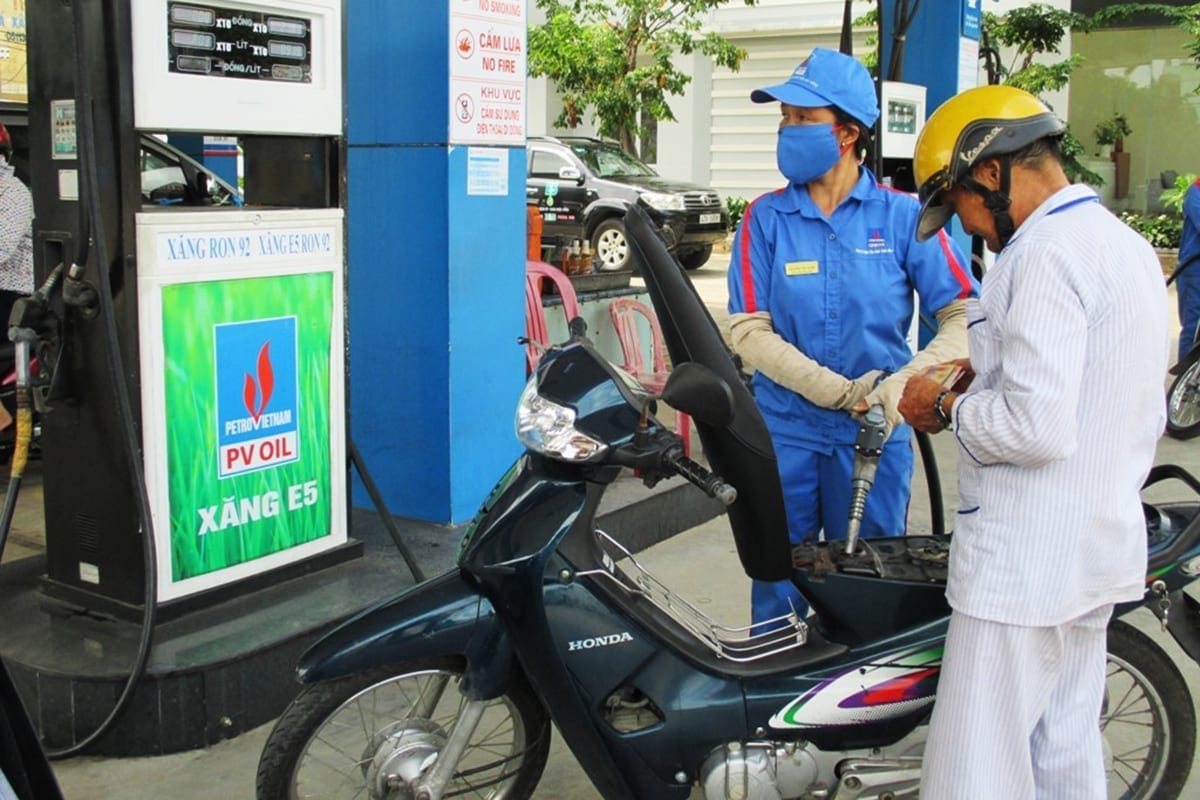
The price of gasoline is on a continual rise, leading the government to depend on its stabilization fund to provide subsidies. On Tuesday, there was yet another increase, with the price of RON95 fuel skyrocketing by 7.69% to VND29,120 (US$1.11) per litre.
Alongside gasoline, the prices of biofuel E5 RON92 and diesel also saw an increase. Biofuel E5 RON92 rose by 5.35% to VND26,570 per litre, while diesel prices saw a 1.59% increase, taking the price to VND30,710 per litre.
For the first time in three years, both the Ministry of Industry and Trade and the Ministry of Finance have been forced to tap into the fuel stabilization fund. This has been done in an effort to subsidize RON95 by VND4,000 per litre and diesel by VND5,000 per litre.
The price of RON95 is now approximately at the same level as it was in July 2022, a period when the global fuel supply chain was disrupted due to the Russia–Ukraine conflict. Diesel, on the other hand, is at its highest level since 2019.
Ongoing military conflicts involving the United States, Israel, and Iran over the weekend have impacted the global market, according to ministry reports. All oil-exporting countries within the Gulf have cut down production as transport through the Strait of Hormuz is currently disrupted.
It’s also notable that the trend of most countries stockpiling fuel has resulted in a sharp rise in global prices.
The price of RON95 gasoline has seen a dramatic 27% increase to $147.5 per barrel, with diesel rising by 20%, kerosene by 4%, and mazut by 41%.
Fuel prices in Vietnam were adjusted on Tuesday, deviating from the usual Thursday adjustment, to reflect global price changes of over 7%. Although global prices have begun to stabilize, domestic prices remain high due to a delay in the pricing cycle.
Earlier on Tuesday, prices began to decline following a statement from U.S. President Donald Trump indicating that the conflict in the Middle East would soon come to an end.
The prices of RON95 gasoline and diesel have dropped by around $20 per barrel in Singapore, falling to $127.2 and $160.4 respectively. These lower levels will be reflected in Vietnam after the next adjustment.
To ensure short-term supply, Deputy Minister of Industry and Trade, Nguyen Sinh Nhat Tan announced that the government had procured four million barrels of oil from its partners. With this existing crude oil stockpile and further supplies expected shortly, he projects that the supply will suffice for 30–45 days, depending on demand and production plans at domestic refineries.
In addition to ensuring supply, the government is taking measures to control retail prices. They have slashed most favored nation import tariffs on gasoline and certain blending materials to zero. This move is intended to incentivize distributors to import fuel from countries that do not have free trade agreements with Vietnam.
The Ministry of Finance has also requested that the government abolish the environmental protection tax on fuel starting March 12. Currently, this tax ranges from VND1,000-2,000 per litre, depending on the type of fuel.
What measures are the government taking to control the rising fuel prices?
The government is using its stabilization fund to subsidize gasoline. They have also cut import tariffs on gasoline and certain blending materials to zero and are considering removing the environmental protection tax on fuel.
What significant change has occurred in Vietnam’s fuel pricing system?
Fuel prices were adjusted on Tuesday instead of the usual Thursday, due to the significant global price changes.
How is the government ensuring short-term fuel supply?
The government has procured four million barrels of oil from its partners, and more supplies are expected shortly. This is expected to meet domestic demand for the next 30–45 days.