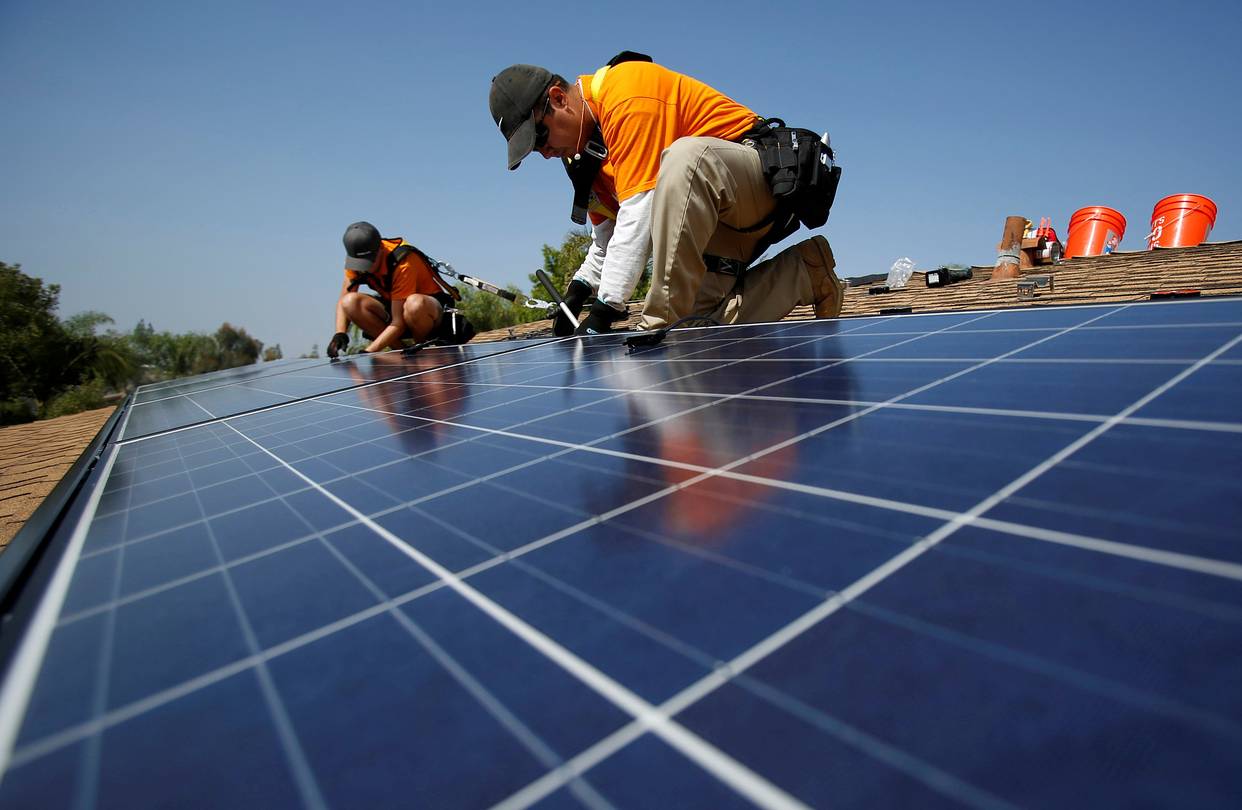
In May, Singapore saw an unprecedented increase in the proportion of renewable energy in its power generation mix, according to recent market data analysis. This considerable achievement is attributed to the country’s efforts to scale up solar power production and import more renewable electricity.
The National Electricity Market’s data indicated a significant upward trend in Singapore’s domestic solar generation, recording its fastest growth since March of the previous year. The rise in imported renewable energy for the third month in a row, reaching its highest level in over two years, also played a crucial role. These factors led to a record-breaking 2.58% of Singapore’s power mix being from renewable sources.
Reducing reliance on fossil fuels in the region has become achievable through cross-border electricity trading, particularly as the demand for electricity from data centers continues to rise. Despite its limited potential for renewable energy due to its size and geography, Singapore has set ambitious aims. By 2035, the country hopes to source about one-third of its power needs, or 6GW, from clean electricity imports. Currently, natural gas-fired power plants make up approximately 95% of the nation’s generation capacity.
From January to May, Singapore imported a substantial 122.7 million kWh of clean electricity, accounting for 0.52% of total power generation. This contrasts with the same period in the previous year, during which Singapore did not import electricity and only began small-scale imports in the last quarter.
In May, the rising importation of electricity continued to replace some fossil fuel-based power generation, marking the third straight month of growth in import share. The overall electricity output in Singapore rose by 0.4% in the first five months of the year.
Currently, Singapore is involved in two cross-border power purchase agreements, namely the 200MW Laos-Thailand-Malaysia-Singapore (LTMS) project and a 50MW pilot Energy Exchange Malaysia project with the Malaysian state utility company, Tenaga Nasional.
Singapore’s Energy Market Authority (EMA) Chief Executive, Puah Kok Keong, noted in October that the extension terms for the LTMS project were still in negotiation as Singapore awaited Thailand’s finalization of transmission fee details under the agreement.
What has led to the rise in the share of renewable energy in Singapore’s power mix?
The significant increase in the share of renewable energy in Singapore’s power mix is due to the country’s efforts to scale up solar power production and import more renewable electricity.
What is Singapore’s aim for clean electricity imports by 2035?
By 2035, Singapore aims to source about one-third of its power needs, equivalent to 6GW, from clean electricity imports.
How are imports affecting Singapore’s reliance on fossil fuel-based power generation?
The country has seen a continuing trend of replacing some fossil fuel-based power generation with imported electricity, leading to an increased share of renewable energy in their power generation mix.