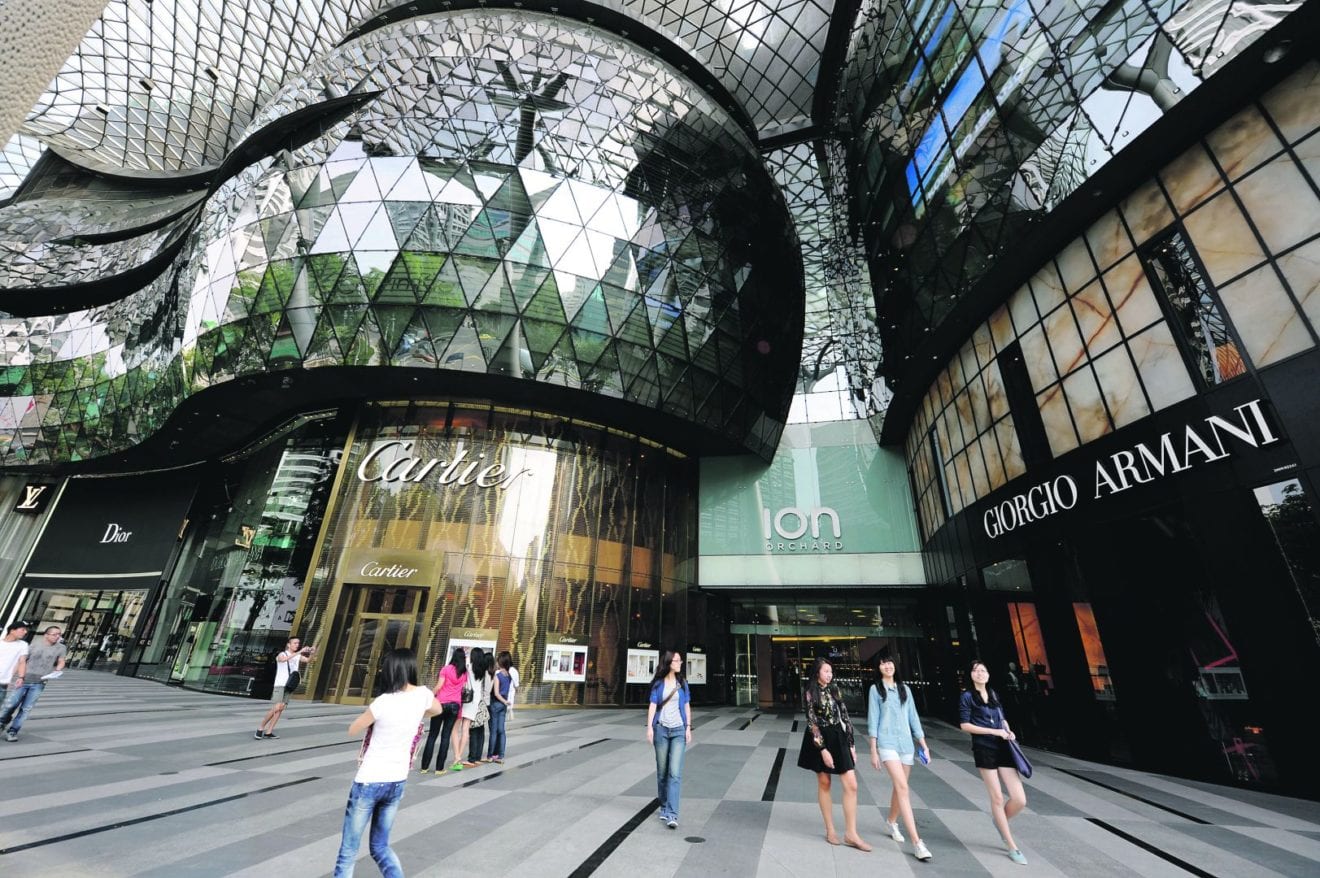
Singapore’s luxury retail market is poised for a remarkable rebound, with projections indicating a 7% growth from last year, according to Bloomberg, which cites data from analytics firm Euromonitor International. This upward trend could lead the city-state back to its pre-pandemic luxury sales peak of S$14.7 billion by 2026. Notably, in the previous year, Singapore’s luxury sales growth was only second to Japan among countries monitored by the firm.
As consumer demand escalates across various luxury segments, brands are increasingly enhancing their presence in Singapore’s bustling market. French jeweler Van Cleef & Arpels opened an exhibition space, Les Jardins Secrets, at the Raffles Singapore hotel last February, a move that garnered attention, as reported by the Financial Times. Similarly, luxury watchmaker Audemars Piguet launched AP House, its first flagship in Southeast Asia, also at Raffles, which has been decorated to resemble a lavish apartment and even features the brand’s inaugural café, merging Swiss cuisine with local inspirations.
In a parallel move, Raffles City mall has been aggressively courting the luxury beauty market by organizing substantial pop-up events that showcase 21 coveted brands, including Chanel, Dior, and Gucci this year. The charm of the mall is that, despite Singapore’s compact size—just 280 square miles with a population of around six million—it ranked third in luxury store openings last year among 32 Asia-Pacific cities, excluding mainland China, as revealed by real estate firm Savills.
Singapore’s appeal to affluent individuals and luxury brands lies in its stability and welcoming business policies, factors that have facilitated the city’s evolution into one of the wealthiest nations globally. The World’s Wealthiest Cities Report 2025 by consultancy Henley & Partners places Singapore as the fourth wealthiest city worldwide, boasting 242,400 millionaire residents, including 333 centi-millionaires and 30 billionaires. Over the past five years, median household employment income has steadily increased, further complemented by a rise in tourism spending.
International visitors brought S$3.9 billion to the local retail sector from January to September 2024, representing a 5% boost from the previous year, according to The Straits Times. These dynamics have crafted the city-state into a beacon for high-end brands seeking a strong foothold and a launchpad into the Southeast Asian market, especially as China’s economic slowdown casts shadows over the global luxury landscape. Jonathan Siboni, founder and CEO of consultancy Luxurynsight, articulated this, stating, “Singapore has proved to be a very stable place for wealthy people,” dubbing it “an oasis in the desert” for luxury markets.
Nonetheless, this luxury boom may encounter hurdles soon. Henley & Partners projects that Singapore will see a net inflow of 1,600 millionaires in 2025—a figure that is less than half of the previous year’s estimate—even as record numbers of wealthy individuals are expected to relocate globally, as reported by The Business Times. Furthermore, although Singapore ranked fifth among global alpha cities for new luxury store openings, a recent Savills report warns that limited real estate options might stifle future growth and expansion for these luxury brands. “The available real estate for luxury brands remains limited, which could somewhat inhibit the growth and expansion of luxury brands in the city in the near future,” noted Sulian Tan-Wijaya, Savills Singapore’s executive director of Retail & Lifestyle, according to Singapore Business Review.
Currently, the luxury marketing wave resonates well with local consumers. Among them is 22-year-old Chloe Liem, an avid collector of exquisite jewelry from established houses like Van Cleef & Arpels and Cartier. “Even though I know luxury items are crazily marked up, I recognize I’m paying for the experience and feeling of the brand,” Liem explained. “I feel confident splurging on these items because I enjoy it.” While some may call it indulgence, to Liem, it’s simply an investment in joy—a sentiment that highlights the emotional connection consumers have with luxury goods.
What is driving Singapore’s growth in the luxury retail market?
Growing consumer demand, international tourism spending, and strategic brand expansions are key factors propelling Singapore’s luxury retail growth.
How does Singapore’s luxury market compare to other Asian cities?
Singapore is ahead of regional rivals such as Japan, China, and South Korea, ranking third in luxury store openings in the Asia-Pacific, excluding mainland China.
Are there challenges facing Singapore’s luxury market?
Yes, projections indicate a decline in the net inflow of millionaires in 2025, and limitations in available real estate for luxury brands could restrict future expansion.