As China devalues yuan and the U.S. is on track to raise rates, Hong Kong, whose currency is pegged to the dollar, is in trouble.
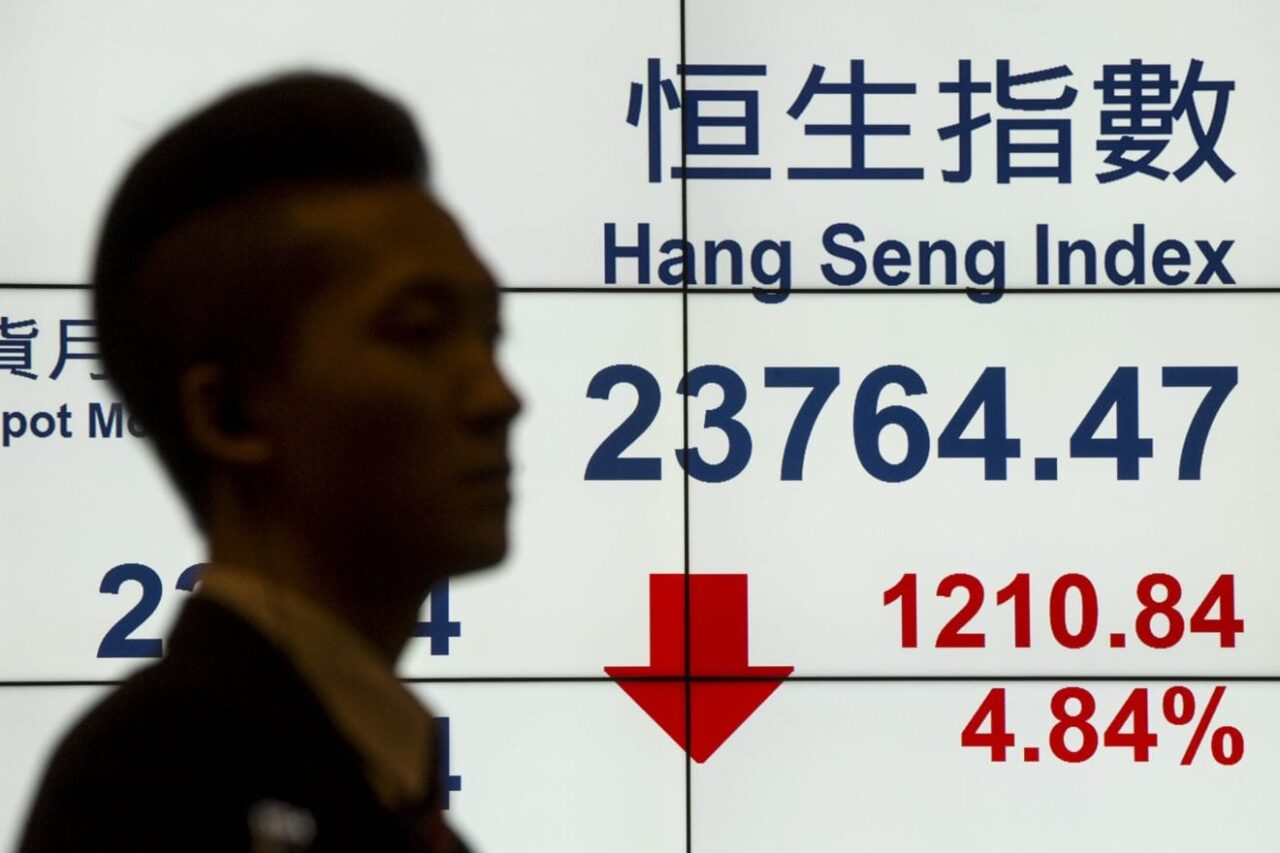
Forecasting “black sky”, UBS now sees the Hang Seng Index to end the year at 19,775, another 5.5% downside from its current level. The Hang Seng Index has fallen by about 25% since its late April high.
Apart from China slowdown, “we have seen a combination of the three pillars of Hong Kong’s economy weakening (tourism and re-export) or showing signs of weakness (property),” wrote Spencer Leung.
The Hang Seng Index is now valued at only 9.4 times forward earnings, a good 0.8 times standard deviation below its 2-year average, but “the current valuation of Hong Kong equity may not be attractive enough to compensate for potential earnings downside.” UBS estimates Hong Kong companies’ earnings could drop 31% next year.
It is not easy for retail businesses to operate in Hong Kong, because the rent is simply too high. UBS estimates that ground-level stores in prime shopping districts in Hong Kong will have to see their rental expenses drop 70% from their peak to break even. Last week, U.S. handbag bag Coach closed its flagship shop in the Central shopping district.
Overnight, the iShares MSCI Hong Kong ETF rose 0.5%.