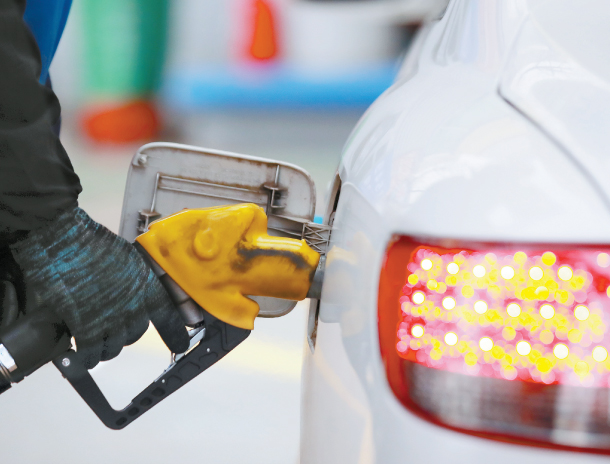
In a notable development, gasoline prices in Vietnam saw a significant drop ranging from 6.47% to 18.8% late on Thursday. The widely used RON95 fuel recorded the highest decrease of 18.8%, reducing its price from Wednesday to VND24,330 (equivalent to US$0.92) per litre.
Along with RON95, other fuels also witnessed a price drop. Biofuel E5 RON92 plunged 16.9%, bringing its price down to VND28,070 per litre. Diesel, another essential fuel, recorded a 6.47% decrease to VND35,440 per litre.
The decline in Vietnam’s fuel prices aligns with the global trend. Internationally, RON95 gasoline decreased by 7.4% from Wednesday, reaching $135.6 per barrel, and diesel fell 6.5% to $204.6 per barrel. These global price changes were reported by the Ministry of Industry and Trade and the Ministry of Finance.
However, the global price drop is not the sole cause for the fall in Vietnam’s fuel prices. A series of tax adjustments implemented late on Thursday also contributed to the decrease in local rates. The environmental protection tax on gasoline, excluding ethanol, diesel, and aviation fuel, has been reduced to zero from the previous VND1,500–2,000, as per a decision of the Prime Minister.
Additionally, the excise tax on all types of gasoline and the value-added tax on gasoline, diesel, and aviation fuel have been modified, with the former being cut to 0% from an earlier 10%.
Despite the ongoing conflict in the Middle East, which has put added pressure on the domestic fuel market, the local fuel supply in Vietnam remains stable, according to an earlier statement by the trade ministry.
What was the percentage decrease in the price of RON95 fuel in Vietnam?
The price of RON95 fuel in Vietnam decreased by 18.8%.
What other factors contributed to the decrease in fuel prices apart from the global price drop?
A series of tax adjustments, including a reduction in the environmental protection tax and excise tax on gasoline, also influenced the decrease in fuel prices.
Despite the conflict in the Middle East, how is the domestic fuel supply in Vietnam?
Despite the escalating conflict in the Middle East, the domestic fuel supply in Vietnam remains secure and stable.