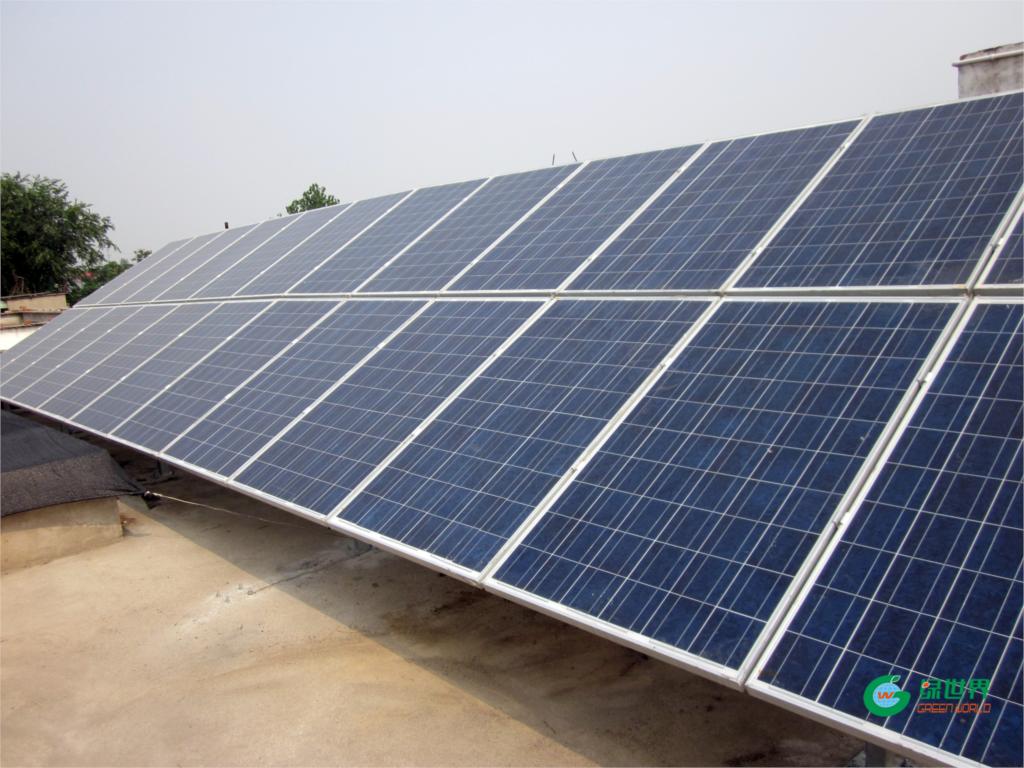
India has achieved a remarkable milestone, adding 22 gigawatts (GW) to its renewable energy capacity in the first half of 2025—its highest six-month boost to date. According to an analysis by Rystad Energy, this represents a staggering 57% increase from the 14.2 GW installed during the same period last year. The latest expansion includes 18.4 GW of solar energy, 3.5 GW from wind, and 250 megawatts (MW) of bioenergy.
The surge in renewable capacity is largely attributed to developers racing to capitalize on the government’s Interstate Transmission System (ISTS) charge waiver. This incentive starts with a 25% discount that will increase annually, fully implemented by June 2028, effectively slashing project costs and spurring immediate action among developers, according to Rystad.
This rapid expansion brings India closer to its ambitious target of sourcing 50% of its installed power capacity from clean energy sources, now reaching a total of 234 GW. Nuclear power is also gaining traction, highlighted by the commissioning of Unit 7 at the Rajasthan Atomic Power Project and the recent approval for the country’s first small modular reactor, set to rise in Bihar. However, the journey forward isn’t all smooth sailing; reliance on coal remains a significant hurdle, and the safety, cost, and waste management debates surrounding nuclear energy persist.
In another notable advance, India has allocated 5.4 GW of collocated solar-battery energy storage systems (BESS) and 2.2 GW of standalone BESS to developers, marking its highest capacity allocation to date. Major players like Jindal Group secured 990 MW of collocated solar and BESS capacity, while NTPC and ReNew both captured 900 MW in the same area. In the standalone BESS sector, JSW Energy was granted 625 MW, and Reliance Power achieved 525 MW of collocated capacity.
Geographically, India’s western states are leading the renewable energy charge, with Rajasthan topping the list at 37.4 GW of installed capacity, closely followed by Gujarat at 35.5 GW, and Tamil Nadu with over 20 GW. As India gears up to transform its energy landscape, it appears that the sun is shining ever brighter on its renewable aspirations.
What has driven India’s recent surge in renewable energy capacity?
The surge is primarily due to developers moving quickly to take advantage of the government’s Interstate Transmission System (ISTS) charge waiver, which significantly reduces project costs and incentivizes timely action.
How much renewable energy capacity has India installed recently?
In the first half of 2025, India added 22 GW of renewable energy, marking a 57% increase from the previous year, with a strong emphasis on solar energy.
What role does nuclear power play in India’s energy strategy?
Nuclear power is increasingly being integrated into India’s energy mix, highlighted by the commissioning of new facilities; however, it faces ongoing debates about cost, safety, and waste management.